
In many factories, electricity costs keep rising even when daily operations look completely normal. Production remains steady, shifts follow the same routine, and machines continue running as they always have. There are no major breakdowns, no sudden changes in equipment, and nothing on the shop floor that clearly explains why the electricity bill is getting higher.
What usually goes unnoticed is how small, everyday operating habits slowly affect power usage. Motors often run under light load, equipment stays switched on during idle time, production schedules change, and reactive power quietly increases in the background. Each of these may seem harmless on its own, but together they create power factor issues that add extra charges and penalties to the electricity bill.
This is why many factories feel surprised when new penalty lines appear, even though nothing feels different inside the plant. Power factor plays a direct role in how much you pay for electricity, yet it is rarely monitored closely.
So, if your electricity bills have been carrying hidden power factor losses without your awareness, this blog explains what power factor really means, why penalties appear, and how better visibility and monitoring can help you cut unnecessary costs and protect long-term savings.
What Power Factor Really Means and Why It Matters
Power factor may sound technical, but in real terms, it simply shows how efficiently your factory is using the electricity it draws from the grid. When most of that electricity is doing useful work, such as running motors, compressors, conveyors, or welding machines, your power factor stays healthy. When a large portion of the same electricity is used only to maintain magnetic fields and support reactive loads, the power factor drops.
This happens quietly in everyday factory operations. Motors often run under a light load. Compressors cycle longer than needed. HVAC systems stay on even when production slows. Machines remain powered while sitting idle. All of these habits increase reactive power and reduce overall electrical efficiency.
Utilities monitor power factor because a low power factor forces their electrical systems to work harder to deliver the same output. This extra strain raises costs for transformers, cables, and substations, which is why utilities apply low power factor penalties and higher charges. In simple terms, a poor power factor directly increases your electricity bill.
How Low Power Factor Increases Your Factory Electricity Bill
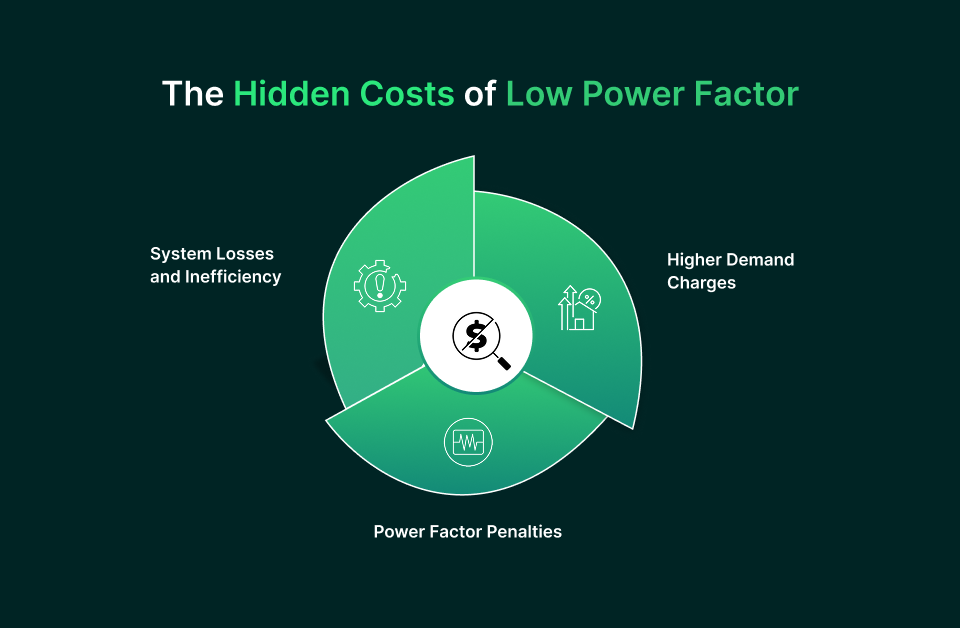
Low power factor can quietly increase your factory electricity bill without obvious reasons. Understanding how it works helps you connect everyday operations to real costs.
- Higher demand charges: When reactive power rises, the total current drawn from the grid increases. For example, motors running under light load still draw power, which pushes demand meters higher even if production output stays the same.
- Power factor penalties: Many industrial electricity tariffs require a minimum power factor. If your factory drops below that limit, penalties appear automatically on the bill. For instance, idle compressors or lightly loaded welding machines can trigger reactive power charges.
- System losses and inefficiency: Higher current causes heat loss in cables, transformers, and panels. This wasted energy increases overall electricity consumption.
Understanding these factors helps you see why rising bills do not always mean increased production. Awareness of power factor connects real operations to actual costs, helping factories take control of electricity expenses.
Common Causes of Low Power Factor in Factories and Their Consequences
Low power factor in factories rarely appears overnight. It builds gradually as everyday operations create small inefficiencies that go unnoticed. Common contributors include motors and compressors running under light load, welding machines starting and stopping frequently, HVAC systems operating longer than necessary, and idle machines left powered. Oversized equipment, seasonal load variations, changes in production schedules, and inadequate maintenance further increase reactive power, quietly reducing power factor over time.
For example, if a factory reduces output during certain shifts, motors and compressors may still run at similar levels. While production drops, reactive power remains nearly constant, causing the power factor to decline without obvious signs on the shop floor.
The consequences of low power factor are real and measurable:
- Higher monthly electricity bills due to increased demand charges
- Rising power factor penalties from utilities
- Voltage drops and frequent system stress
- Equipment overheating and reduced usable electrical capacity
Most teams only realize the problem when penalties appear on the bill, by which point weeks of inefficient energy use have already added costs. Understanding these patterns is essential for controlling electricity expenses and maintaining long-term savings.
Tools like enciser’s Emerald help track total electricity consumption in real time, revealing these hidden patterns so teams can take action before penalties appear and optimize energy use consistently.
How Power Factor Can Be Improved and Maintained Over Time
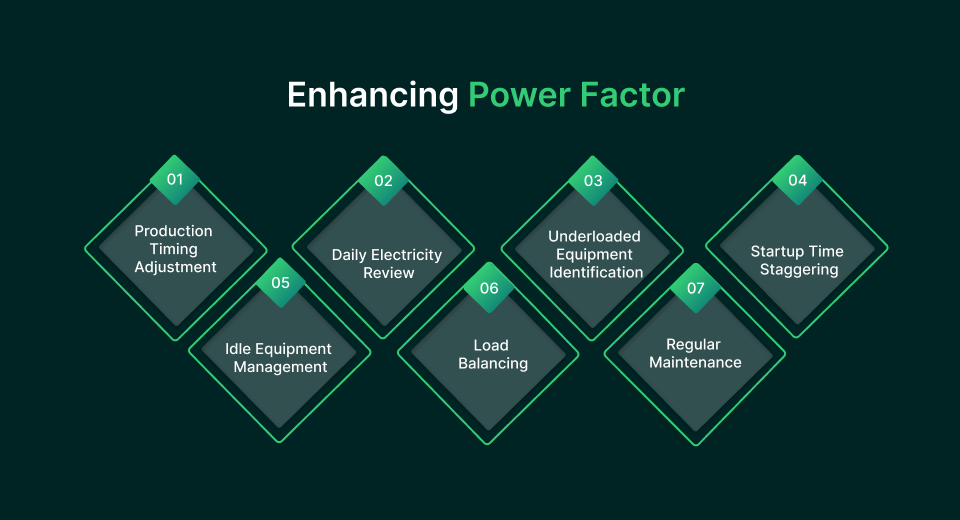
Improving power factor starts with understanding electricity usage, not just installing equipment. Many factories rely only on power factor correction panels and assume the problem is solved. While these panels are important, they respond to reactive load but do not show why it increases.
Key steps to improve and maintain power factor include:
- Review daily electricity behavior to spot inefficiencies
- Identify underloaded motors and equipment running below capacity
- Stagger startup times for large compressors and heavy machines to reduce demand spikes
- Avoid leaving idle equipment powered unnecessarily
- Balance loads across shifts to use electricity more effectively
- Maintain motors, compressors, and other equipment regularly to prevent inefficient operation
- Adjust production timing to align with electricity demand patterns
Power factor is not a one-time fix. Production changes, new equipment, seasonal demand, and maintenance delays can lower efficiency again. Continuous monitoring and routine review are essential for lowering power factor penalties, reducing electricity costs, and securing long-term savings.
enciser’s Emerald helps factories track daily, weekly, and monthly electricity patterns on the enciser app, making it easier to spot rising reactive power, adjust operations, and maintain a healthy power factor over time.
How Tracking Electricity Continuously Helps Improve Power Factor
Monthly electricity bills only show totals after the fact, leaving factories unaware of what is driving rising costs. By the time penalties appear, weeks of inefficient energy use may have already added significant expenses. Real-time electricity monitoring changes this by making electricity consumption visible as it happens.
With daily, weekly, and monthly trends clearly displayed, unusual load behavior becomes easy to spot. Sudden spikes in demand, extended operating hours, and inefficient usage patterns are immediately noticeable. These trends often signal rising reactive power, even if power factor is not shown directly.
For example, if electricity usage consistently jumps in the evenings when production slows, it could indicate idle machines or HVAC systems running unnecessarily. Spikes after lunch breaks may reflect inefficient startup sequences. Real-time monitoring allows teams to connect operational decisions with their impact on power factor and electricity costs, supporting more informed energy management.
Power Factor Management Made Easier with enciser’s Emerald
Most factory teams do not struggle with power factor because they ignore it. They struggle because they cannot clearly see how everyday operations affect electricity use. Machines start and stop, loads shift across shifts, and reactive power quietly rises, but none of this is obvious from a monthly electricity bill.
enciser’s Emerald helps close this gap through real-time electricity monitoring. It connects to the submeter and shows total electricity consumption clearly in the enciser app. Daily views reveal how long equipment actually runs. Weekly trends show recurring load patterns. Monthly summaries confirm whether power factor improvement steps are working or not.
This visibility helps teams detect rising reactive power early, control electricity costs, and reduce power factor penalties. For a clearer way to track real-time electricity consumption and analyze patterns, tools like enciser’s Emerald offer a practical solution.
Everyday Mistakes That Lower Power Factor
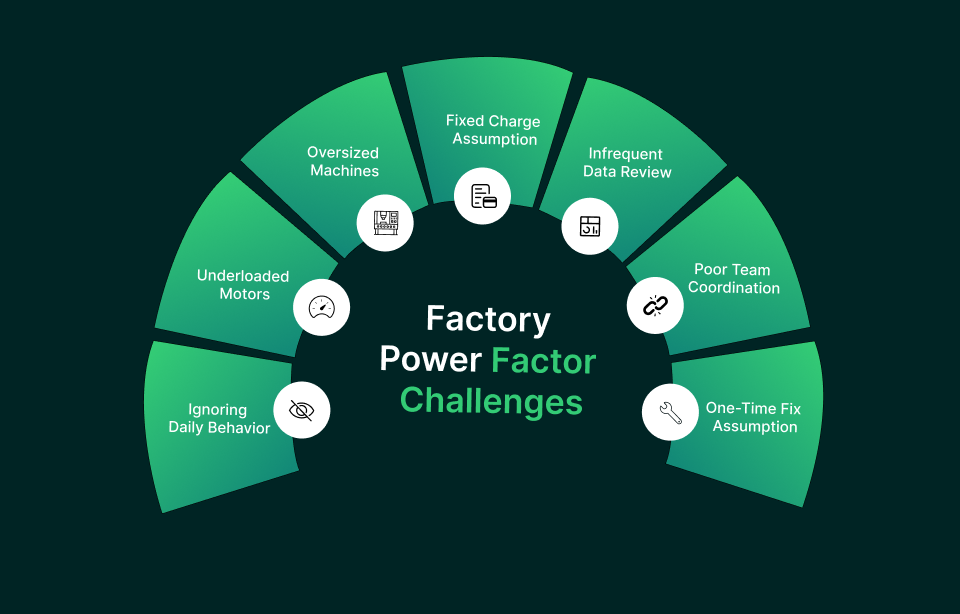
Most factories do not struggle with power factor because of one major failure. The problem usually comes from a few everyday habits that quietly push electricity costs higher over time.
- Many factories rely only on capacitor banks without reviewing daily electricity behavior, which allows reactive power problems to continue unnoticed.
- Teams often ignore underloaded motors and idle equipment, even though these machines keep drawing reactive power and quietly lower the power factor.
- Oversized machines are installed for safety margins, but they cycle inefficiently and increase electricity demand when they run far below capacity.
- Power factor penalties are treated as unavoidable fixed charges instead of warning signs that something in daily operations needs correction.
- Electricity data is reviewed only when the monthly bill arrives, which is too late to prevent penalties and rising charges.
- Poor coordination between production and maintenance teams leads to inefficient scheduling, delayed fixes, and unnecessary reactive load.
- Many factories assume power factor correction is a one-time fix, even though production changes and equipment wear continue to affect efficiency over time.
These gaps allow reactive load to grow quietly and increase power factor penalties. Power factor management works best when visibility, operations, and correction systems work together to control electricity costs and protect long-term savings.
Measurable Benefits of Improving Power Factor
Factories that improve power factor begin to see clear and measurable results in daily operations and monthly electricity bills.
- Lower power factor penalties on utility bills
- Reduced demand charges during peak hours
- Lower total electricity consumption and costs
- Better equipment life due to reduced electrical stress
- Improved voltage stability across machines
- More usable electrical capacity for production
- Fewer utility warnings and compliance notices
- Smoother and more predictable operations
For example, many factories notice demand charges and power factor penalties drop within one or two billing cycles after correcting inefficient load behavior. Over time, power factor management becomes part of routine operations instead of a reactive task.
Conclusion
Power factor affects your electricity bill more than most factories realize. Penalties, reactive power charges, and higher demand costs often come from everyday operations, not sudden faults.
The key is not chasing every issue at once. It is building awareness. When factories understand how electricity is actually used each day, they gain control over costs and prevent repeated penalties.
Real-time monitoring makes this possible. With visible data, teams can spot inefficient behavior early and take action before penalties appear.
Tools like enciser’s Emerald help by providing clear daily insights into total electricity consumption, supporting smarter power factor management, and long term electricity savings.
FAQs
What is the power factor in simple terms?
Why do utilities charge power factor penalties?
How can I tell if my factory has a low power factor?
Does power factor correction always reduce electricity bills?
How often should power factor be reviewed?
Can real-time monitoring help maintain the power factor long term?
What happens if the power factor is ignored?
Is power factor only an industrial problem?

 Previous Blog
