Introduction
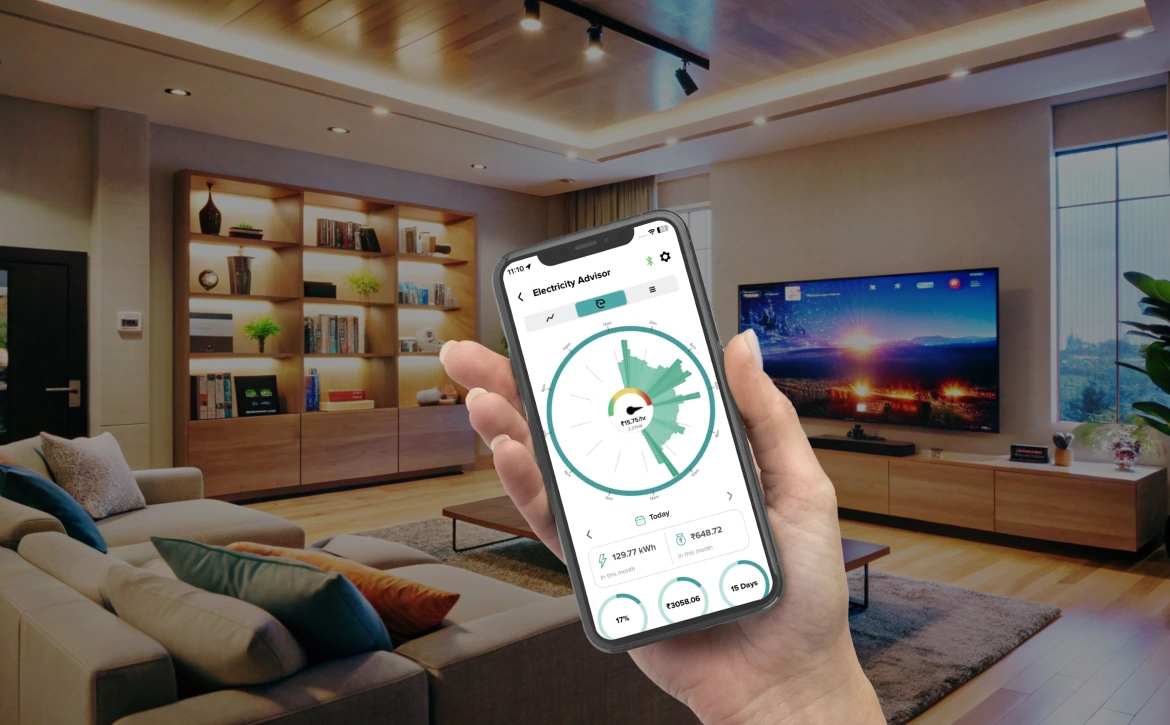
Energy monitors aka home energy monitors (HEM) are special devices that are built to monitor the electricity consumption of your home.
Smart home energy monitors can even show you the data in real-time to help you make informed decisions when it comes to using energy at home.
Being internet-enabled makes them accessible via a smartphone or a computer using which you can adjust the energy usage of different appliances and the house as a whole.
As such, a whole-house energy monitor probe has two different parts. A physical device or a monitor that hangs onto the meter and reads the usage. And a user-friendly interface or mobile app to access and manage your electricity consumption over the internet.
Needless to say, there are many benefits of monitoring your home’s energy consumption starting with “lower utility bills.”
On top of that, it gives you a lot of control over how you use power at the end of the day without wasting it too often as is the case with traditional households.
Better known as energy efficiency, it is the practice of saving energy by adopting mindful habits like turning off the lights when you’re the last to leave the room or turning off the AC once the space has been cooled.
The point is individual behaviors such as these can significantly promote responsible use of electricity or the practice of energy efficiency and cut down your monthly costs.
To help you make the most of it, there are several energy-friendly devices too that are coming out in the market as of late. For instance, smart energy-efficient appliances and energy monitors.
What is an Energy Monitor?
An energy monitor is a device that is used to monitor or record the electricity consumption of a building or appliance.
A HEM can be connected to the energy meter or the main power supply that goes into your house to continuously read the units of electricity being used.
Smart energy meters that are internet-enabled can also show you the individual electricity consumptions, costs, and greenhouse gas emissions of different rooms and appliances to give you a better outlook.
Similarly, there are other types of energy monitors that are quite prominent in the market. E.g.,
- Whole-house monitors are meant to read the entire electricity consumption of your house without bifurcating the usage based on different areas, rooms, and appliances.
- Appliance-specific monitors are designed to show you the energy usage of a particular appliance or electronic. This makes them perfect for those devices that consume the maximum amount of energy at your home.
- Smart plugs are built to read the power consumption of a socket as in all the devices that may be connected to it. All you need to do is stick a smart plug directly onto the socket and connect the devices to the plug to get a real-time track of their energy usage.
How Does a Power Monitoring System Work?
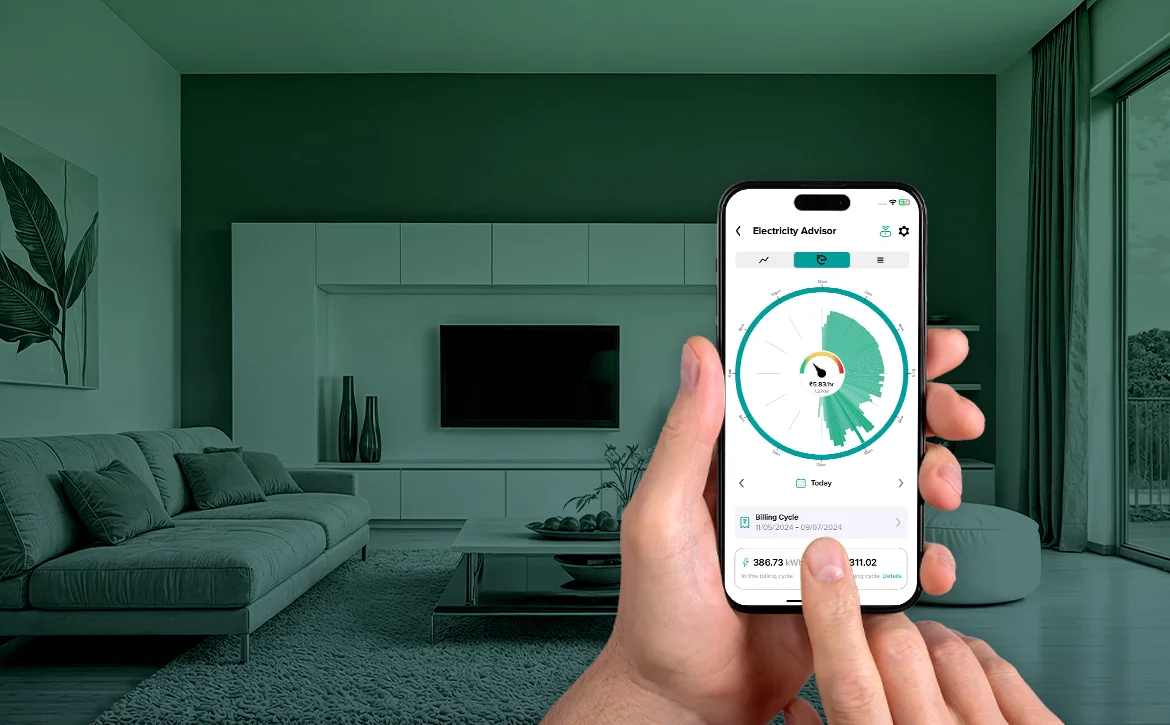
A power monitoring system is designed to not only read but also transmit and analyze the data of your power consumption.
As such, there are several components to it.
For starters, sensors and meters can be installed at various points in the electrical system such as the main panel or circuit boards to measure different electrical parameters like the voltage, current, and usage frequency.
The collected data is then transmitted to a database or central system through wired connections and Wi-Fi for further analysis.
Upon analyzing the details, meaningful insights regarding your energy consumption and efficiency are sent to you via the Internet which you can view/ manage using an app or software in real-time.
In case of any anomalies, the system will also notify you via alerts and reminders.
Smart energy monitors on the other hand may also offer advanced features such as remote access, management, and automation to improve efficiency and reduce your energy bills.
Are Energy Monitors Accurate?
Modern energy monitors are quite sensitive when it comes to sensing the electricity consumption of your home, thanks to their sophisticated designs and sensors.
However, certain factors can influence the precision or accuracy of an energy monitor to some extent. Some of these include:
- The Quality of Sensors and Meters.
- Installation and Calibration.
- Sampling Rate and Processing.
- Power Factor and Harmonics.
- Resolution and Range (as in the smallest measurable change and maximum measurable value respectively).
- Environmental factors such as temperature, humidity, and electromagnetic interference.
- Data communication and logging.
Apart from these crucial factors, the type or specification of an energy monitor can also affect its accuracy to some extent.
For instance, while a consumer-grade energy monitor can have an accuracy level of ±1-5%, an industrial or professional-grade energy monitor may give you a better accuracy of ±1% or less.
This makes the latter a perfect choice for settings where precision is almost critical; whereas, for home use, a simple consumer-grade energy monitor should suffice.
What Energy Does a Monitor Use?
As an electronic device, an energy monitor does require a continuous power supply to operate and function.
The source of the power supply could vary between a direct electrical connection as is the case with smart plugs or power drawn from the very device or appliance being monitored as in appliance-specific energy monitors.
Advanced energy monitors can also run on batteries without relying on an external source of electricity.
In essence, it all depends on the type and efficiency of an energy monitor.
What Does an Energy Monitor Do?
Besides showing you the real-time energy usage of your space, an energy monitor offers several other insights. E.g.,
- Real-time monitoring of energy consumption.
- Usage history of the entire month or for a defined duration.
- Estimate the cost of utility bills.
- Extent of energy efficiency.
- Identification of energy-hogging devices.
- Load identification and management.
- Analysis of the quality of power.
- Understanding the environmental impact of your household.
- Automation and integration with smart home systems.
- Alerts and notifications in case of anomalies and when you exceed the desired energy consumption.
As you can see, an energy monitor is a multi-dimensional device that goes far beyond measuring energy usage and encompasses a wide array of features and data metrics.
By leveraging the data provided by these energy monitors, you can significantly reduce your energy bills and usage while improving the efficiency of your electronics and appliances.
Also Read – How Smart Energy Monitoring Can Help You
How Can We Monitor Energy Use?
The process of monitoring the energy consumption of your home using an energy monitor is rather simple.
It all starts by installing or mounting your energy monitor to your meter or power supply.
Before you do that, it is important to understand your energy usage patterns and requirements in the first place.
Based on that, you can set up your energy monitor by following these steps:
Step 1: Choose the right energy monitor.
Step 2: Install the sensors or meters on the main electrical panel or the lines you want to monitor after turning off the main power supply.
Step 3: Mount the energy monitor in a suitable location preferably the main electrical panel or energy meter.
Step 4: Restore the power and configure the monitor.
Step 5: Connect the system to your home’s network or Wi-Fi and download the app for monitoring in real-time.
Step 6: Test the system and set up alerts and notifications.
Smart home energy monitors such as Enciser’s Emerald can also be integrated with smart home systems and appliances to automate their energy usage.
Unique Features of Enciser’s Emerald
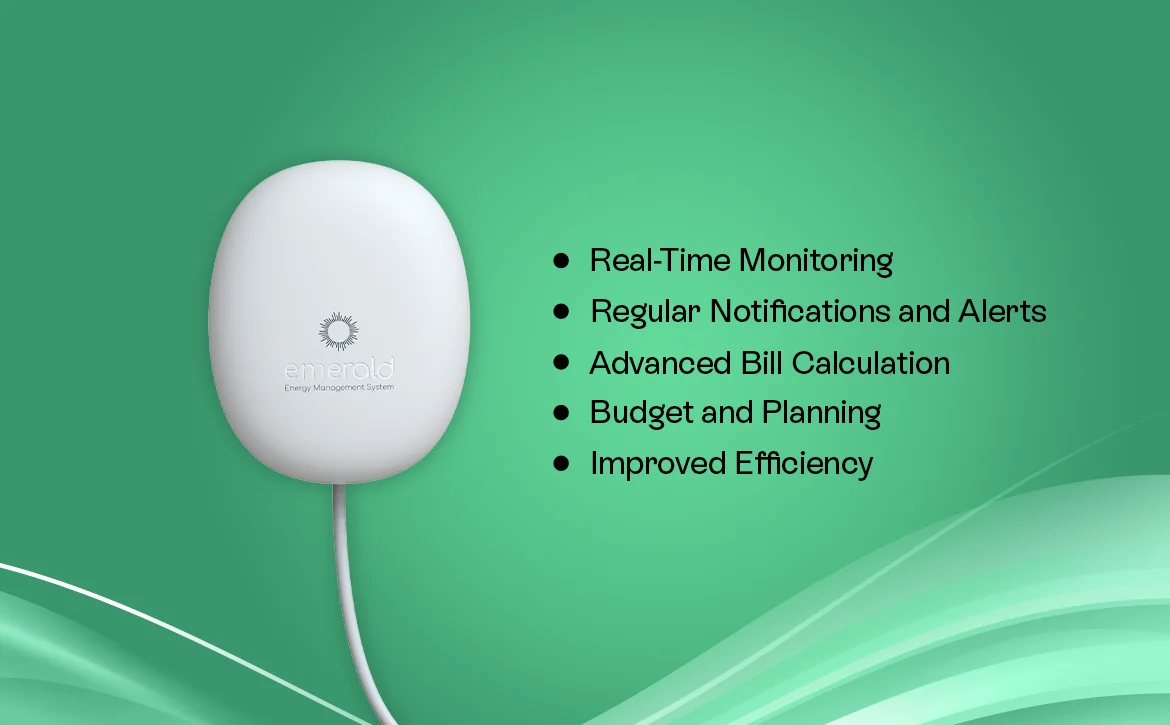
As a smart energy monitoring system, Emerald is packed with tons of useful features to enhance the energy efficiency of your home.
With a sleek and compact design, it can be easily mounted on the smart energy meter that has replaced the traditional meters of Indian homes as of late.
Some of its most useful features apart from a DIY installation are:
- Real-time monitoring of energy usage via a mobile app (Enciser).
- In-depth insights into your household’s energy consumption including different areas and appliances.
- Smart budgeting for current and subsequent months.
- Regular alerts and notifications when you exceed the budget or if there’s a fault or error.
All-in-all, our smart energy monitor Emerald is built with some of the most integral features that you could think of when practicing energy efficiency at home or office for a lack of utility bills.
Benefits of Using Energy Monitors
Although, the main objective of an energy monitor is to give you a better understanding of your home’s energy consumption; at the end of the day, it is all about saving the cost.
Speaking of which, the key benefits of using energy monitors include:
- Lower utility bills.
- Energy awareness.
- Finding energy hogs.
- Reducing the carbon footprint or the environmental impact of your household.
- Early detection of faults and anomalies.
- Superior control and automation.
- Better decision-making and energy efficiency.
And finally, an increased value of your property when it is time to sell and move.
Conclusion
The need to have an energy monitor at home is becoming more and more crucial as we speak considering the skyrocketing prices of fuel and electricity especially in high-demand countries such as India.
Besides, the scope of energy monitors is not just limited to measuring the energy usage of your home alone, but also to recommending the best practices and habits that you should adopt to minimize the usage of electricity and thus its cost.
Making all of that possible is our smart energy monitoring app Enciser using which you can even set an energy budget for the future based on your past usage.
Should you be about to exceed the limit, our smart Enciser app will notify you the same through alerts and notifications to make the necessary changes.
For more info, kindly provide us your contact details and we’d be happy to get you started with your own Emerald.
FAQs
Q 1. How accurate are energy monitors?
Ans: Home energy monitors are accurate enough to give you a close estimate of your energy usage and the expected cost of it.
For a precise reading, you can always go for advanced/ professional energy monitors like those meant for industrial purposes.
Q 2. Do energy monitors consume a lot of energy?
Ans: In general, energy monitors take very little energy to run as they are by default designed to be energy-efficient. With their primary purpose being energy saving and cost cutting, a standard energy monitor may need just a few milliwatts or more to operate and carry out their function.
Q 3. Can I monitor specific appliances with energy monitors?
Ans: Smart energy monitors such as Enciser’s Emerald can be used to monitor the energy consumption of different appliances separately.
Q 4. How do I install an energy monitor?
Ans: Installing an energy monitor like Emerald is simple. All you need to do is mount the energy monitor to your smart energy meter, connect it to the internet, and download the mobile app to view and manage your electricity consumption.
Q 5. Are there mobile apps for monitoring energy usage?
Ans: Smart energy monitors like Emerald come with a user-friendly interface or mobile app such as ‘Enciser’ to monitor and manage the electricity consumption of your home. However, it varies from product to product.
For example, smart plugs may have a small display screen on them to show you the power consumption of the particular socket.

 Previous Blog