If you have been using an inverter AC, this thought might have crossed your mind at some point. Does an inverter AC really save electricity, or does it just sound efficient on paper?
Many people install inverter ACs expecting lower electricity bills. A few months later, the bills still feel higher than expected. Cooling feels comfortable, the AC runs smoothly, yet electricity consumption does not seem to drop the way it was promised. This confusion is common in homes, offices, and even commercial spaces.
The reason is simple. Electricity savings do not depend only on choosing an inverter AC. They depend on how long the AC runs, how the space is used, temperature settings, insulation, and what other electrical loads are active at the same time. An inverter AC can reduce power usage, but it does not automatically guarantee lower electricity bills in every situation.
This blog explains how inverter ACs actually work, when inverter ACs save electricity, when they do not, and how understanding real usage patterns helps you make better decisions about cooling and electricity costs.
How does an Inverter AC Works
An inverter AC cools a space by adjusting how hard its compressor works, instead of switching it fully on and off every few minutes. Once the room reaches the set temperature, the AC slows down and runs gently to maintain comfort. A regular AC, on the other hand, keeps restarting at full power whenever cooling is needed.
This difference matters in real usage. When an inverter AC runs for longer, steady hours, it avoids repeated power spikes and can reduce electricity consumption. That is where energy savings usually come from. But if the AC is switched on and off frequently, or used for short bursts, the inverter advantage becomes smaller.
This is why inverter AC electricity consumption can look very different from one home or office to another. The technology helps, but actual savings depend on usage patterns, operating hours, and how consistently the AC is used.
Why Inverter ACs Do Not Always Save Electricity as Expected
Inverter ACs are widely expected to save electricity because of how they perform in controlled conditions. In testing environments, the room temperature stays stable, the insulation is proper, and the AC runs for long, uninterrupted hours. In this setup, the inverter compressor avoids frequent high-power restarts and uses electricity more evenly, which lowers overall power consumption.
Manufacturers often highlight these results when comparing inverter AC electricity consumption with traditional ACs. On paper, the comparison is accurate. In everyday use, conditions are rarely this steady. Doors open, sunlight heats the room, people move in and out, and cooling demand keeps changing.
This difference between test conditions and real-world usage explains why many users do not see the expected savings. Understanding this gap helps set realistic expectations about when an inverter AC actually saves electricity and when it does not.
How Inverter ACs Impact Electricity Usage
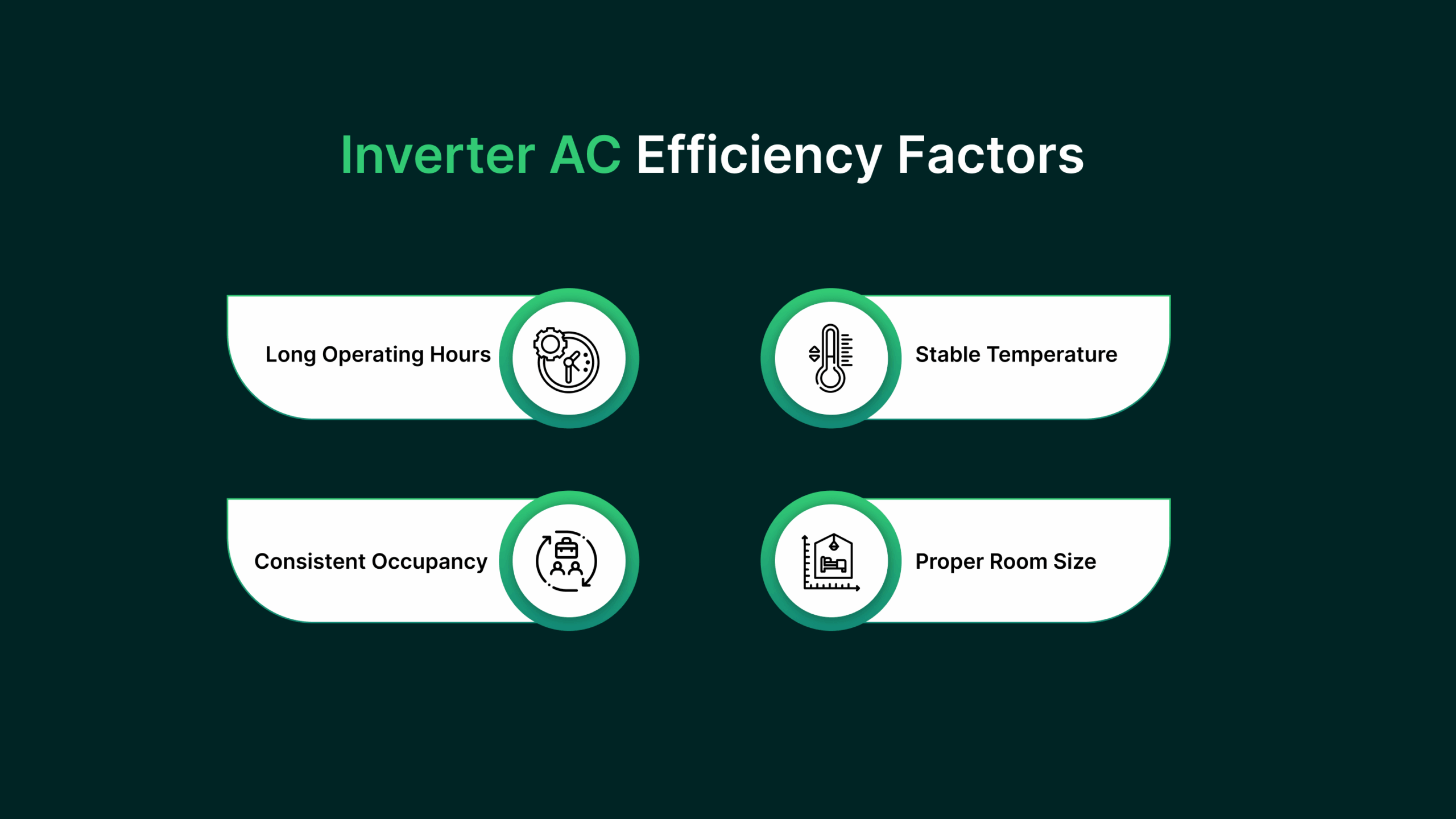
An inverter AC can save electricity, but only when usage patterns and room conditions allow the system to operate efficiently. The compressor works best when it can run steadily at lower speeds instead of switching on and off frequently. Key factors that support real electricity savings include:
- Long, uninterrupted operating hours: Continuous runtime allows the compressor to maintain cooling efficiency.
- Stable temperature settings: Minimal changes reduce sudden load shifts and avoid extra energy use.
- Proper room size and insulation: Matching the AC capacity to the room and limiting heat entry keeps the system from overworking.
- Consistent occupancy patterns: Regular use helps the AC operate predictably and efficiently.
However, electricity savings may be limited when real-world conditions disrupt steady operation:
- Short or intermittent usage cycles force frequent high-power startups.
- Oversized AC units cool rooms too quickly, causing inefficient cycling.
- Poor insulation allows constant heat entry, increasing the load.
- Irregular occupancy or fluctuating cooling demand makes energy use unpredictable.
- High electrical load from other equipment adds to the total electricity consumption.
High electrical load from other equipment adds to the total electricity consumption. In short, an inverter AC does not automatically guarantee lower electricity bills. Savings appear only when usage patterns, room conditions, and operating hours align with the technology’s strengths.
enciser’s Emerald makes it easier to see how these factors impact real electricity consumption in your space, helping households, offices, and commercial areas monitor usage, spot inefficiencies, and take actionable steps to maximize inverter AC energy efficiency and control electricity costs.
Inverter AC vs Normal AC Electricity Usage in Real Life
In real-life settings, the difference between inverter AC vs normal AC electricity usage is not always as large as expected. Many people assume an inverter AC automatically lowers bills, but actual savings depend on how the AC is used.
Short, careful use of a normal AC can consume almost the same electricity as an inverter AC that is turned on and off frequently or operated at inconsistent temperatures. Running hours, temperature settings, room conditions, and other appliances in the space often affect total electricity consumption more than the type of AC.
This shows that understanding electricity usage patterns is more important than relying solely on specifications. Observing real consumption helps identify when inverter ACs actually save energy and when additional measures are needed to control electricity bills effectively.
How Electricity Monitoring Turns Usage Into Clear Insights
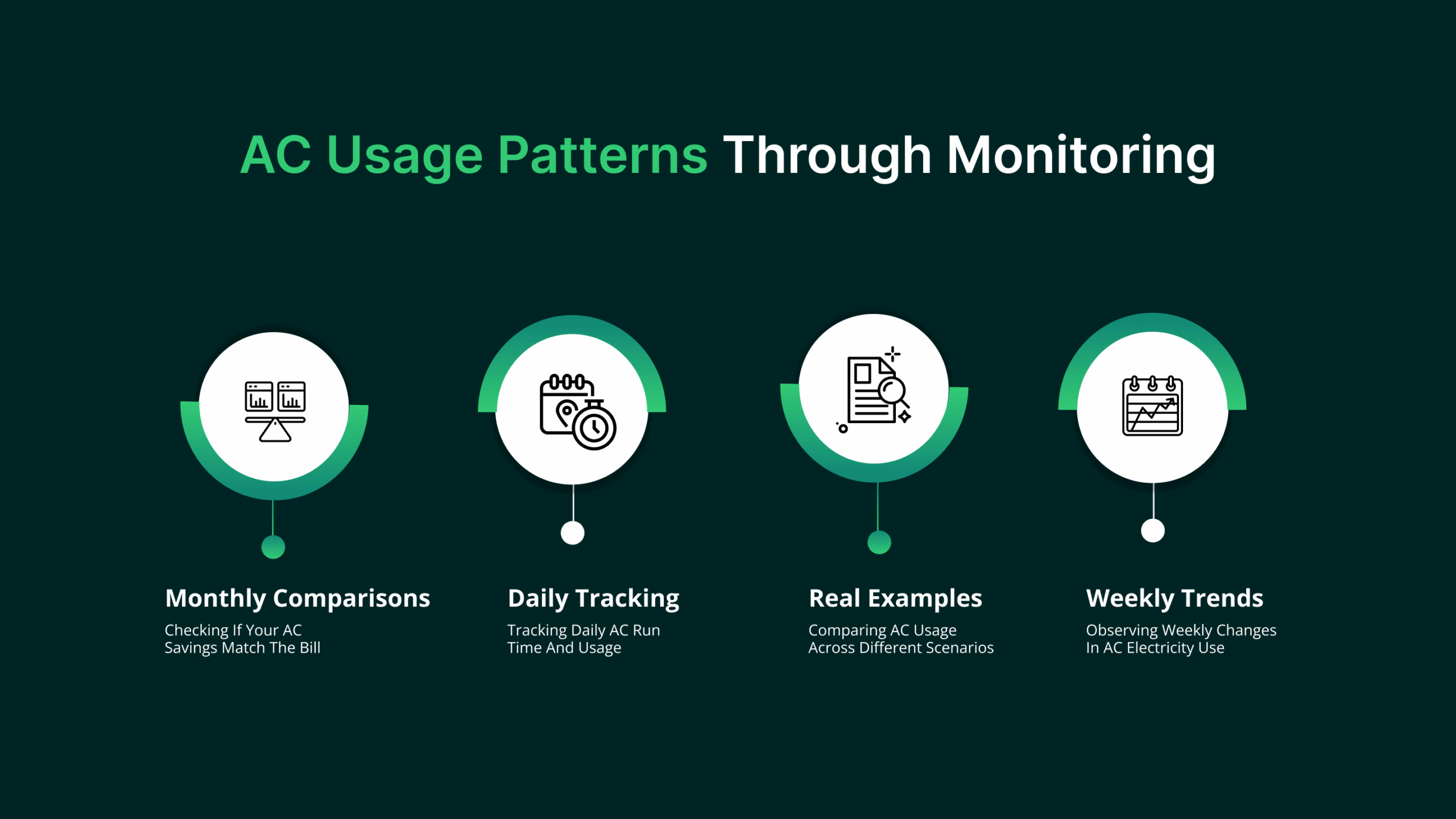
Understanding electricity use becomes much easier when you can see what is happening, not just pay for it later. Most people only notice their inverter AC electricity consumption when the monthly bill arrives, which makes it hard to connect daily habits with actual costs. This is where monitoring makes a real difference.
- Daily tracking shows how many hours the inverter AC actually runs and whether it operates continuously or in short bursts.
- Weekly trends help identify rising usage caused by weather changes, longer cooling hours, or increased occupancy.
- Monthly comparisons reveal whether inverter AC energy efficiency matches expectations or if normal AC power consumption patterns are repeating.
- Real examples, such as tracking AC usage during overnight bedroom cooling versus daytime on-and-off use, clearly show why results vary.
Monitoring does not reduce electricity on its own, but it replaces guesswork with clarity. With visible data, households and offices can adjust usage confidently and make smarter energy decisions.
enciser’s Emerald supports this process by offering clear, real-time visibility into overall electricity usage trends, helping users understand how AC usage contributes to consumption and where efficiency improvements may be possible over time.
How enciser’s Emerald Helps You Measure AC Electricity Consumption
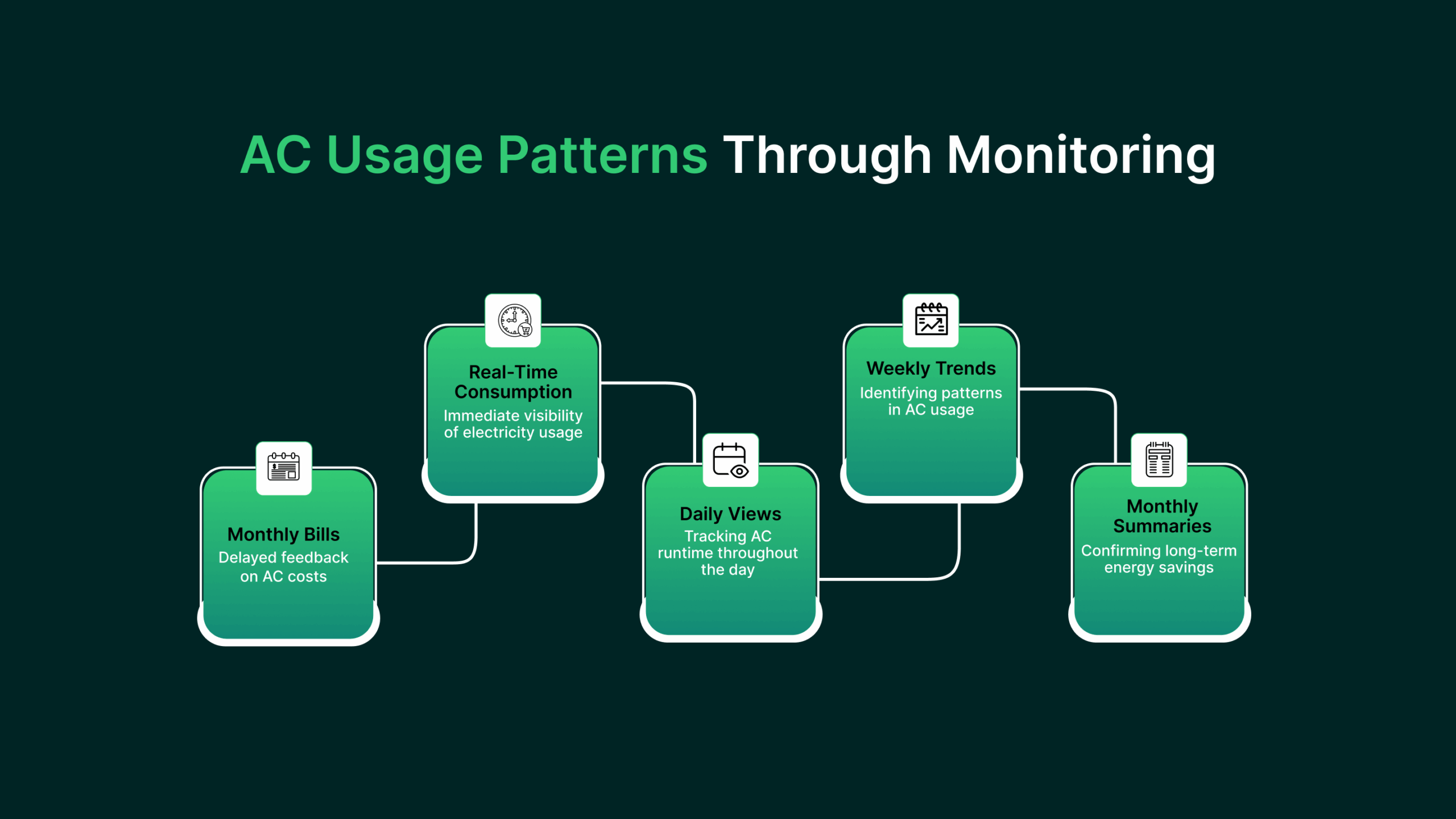
Most people judge AC electricity consumption only by the monthly bill, which arrives long after the usage decisions are made. By then, it is hard to connect AC runtime, temperature changes, or extended operating hours with the final number on the bill. This lack of visibility often leads to confusion about whether an inverter AC is actually saving electricity.
enciser’s Emerald brings clarity to this gap by showing total electricity consumption in real time through the enciser app. As cooling patterns change, the overall impact on electricity usage becomes visible almost immediately.
Daily views help identify how long the AC truly runs. Weekly trends highlight usage spikes during hotter days or extended working hours. Monthly summaries confirm whether inverter AC usage is translating into lower electricity consumption over time.
With this clear view, households, offices, and facilities can adjust cooling habits based on real data instead of assumptions, making smarter decisions that support consistent energy savings.
Key Takeaways
An inverter AC can save electricity, but only when real-life conditions support how the system works. The technology helps, but it does not automatically lower electricity bills. What matters more is how long the AC runs, how consistently it is used, and what else is drawing power at the same time.
Homes see better results with steady overnight usage. Offices benefit when cooling follows fixed schedules. Factories must view AC load alongside machines and production equipment. Across all spaces, the key is understanding total electricity consumption, not just AC efficiency.
When usage is visible, decisions become practical, and savings become measurable. To make it simple, enciser’s Emerald helps track real-time electricity patterns, making it easier to adjust cooling habits and achieve reliable, long-term energy savings.
FAQs
Does an inverter AC always save electricity?
Is inverter AC power consumption lower than that of a normal AC?
Why is my inverter's AC electricity bill still high?
Is an inverter AC suitable for factories or commercial spaces?
How can I know if my inverter AC is actually saving electricity?
Does monitoring help reduce the inverter AC running cost?

 Previous Blog
