Introduction
An Energy Management System (EMS) is a sure-shot way of reducing the energy consumption of your home, office, or workplace.
Designed to monitor and manage the power consumption of a device or building, it is a sophisticated system of software and hardware that can be used in various settings that use electricity as the main fuel.
Be it residential, commercial, industrial, or institutional, implementing an EMS can help you big time in reducing the electricity usage and monthly bills of your space.
Given the soaring prices of fuel/electricity in progressive countries like India, it is high time to opt for an energy management system that can help you become energy efficient and even energy-independent should you have a renewable source of energy like wind or solar.
Luckily, there are tons of EMS solutions in the market that you can choose from depending on your place and requirements.
Some of the most common types of EMS include home energy management systems (HEMS), building energy management systems (BEMS), industrial energy management systems (IEMS), and commercial energy management systems (CEMS).
Albeit self-explanatory, these systems largely differ based on the type of structure or settings that they are meant for.
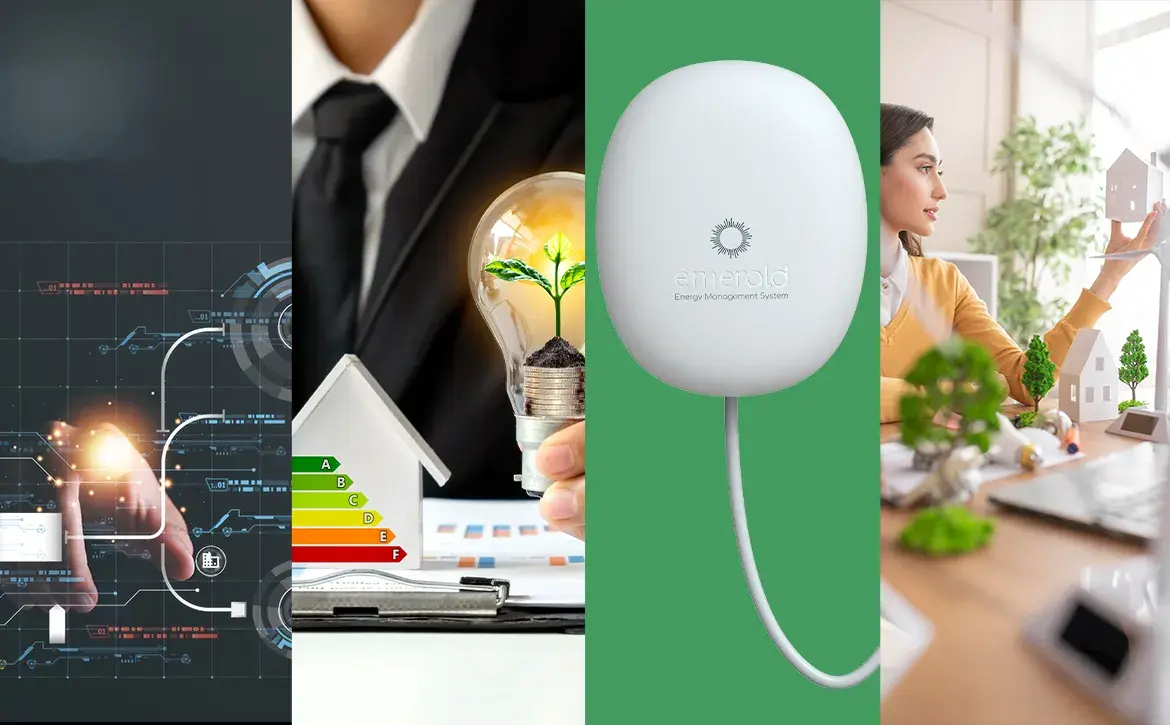
For instance, our Enciser’s Emerald is a small and compact electricity usage monitor device that is perfect for smaller spaces like households, shops, and offices.
With real-time data on your energy usage right at your fingertips, a smart energy monitor like Enciser can help you in more ways than you can fathom when it comes to saving energy and the overall cost of running a place.
1. Cost Savings on Electricity Bills
Implementing an EMS in your home or building can significantly reduce the monthly bills of your energy usage.
Thanks to features such as real-time data of the energy being used, remote access and control of energy-consuming devices and areas, automation or scheduled operation of appliances or equipment, and so on.
The point is that with proper monitoring and control of your power supply, an EMS can help you save as much as 5-15% of energy and cost depending on the type of energy management.
Theoretically, though, a fully-fledged energy management system built with sophisticated cost-saving features can save upto 29% of energy costs.
2. Improved Energy Efficiency
Nicknamed the ‘first fuel’ in clean energy transitions and the biggest step to meet the Net Zero Carbon Emissions by 2050 scenario, energy efficiency refers to the practice of using the minimum amount of energy required to run a machine or perform a task.
And while there are multiple ways to become energy efficient like switching to renewable energy and Energy Star appliances, an EMS has proved to be relatively efficient, affordable, and practical.
Compatible with both traditional and modern households, an energy management system can significantly enhance your efforts to minimize the use/loss of energy and ultimately cut costs.
Besides the cost, energy efficiency can also help you reduce your household’s carbon footprint or greenhouse gas emissions or the environmental impact as a whole.
3. Environmental Impact and Sustainability
Speaking of which, lack of environmental impact is perhaps one of the biggest long-term advantages of adding an EMS into your space. The fruits of which would be reaped by many of your future generations.
But to be able to leave a green and healthy environment for all, we ought to be proactive today.
That is, by implementing an energy-efficient technology like EMS into your home or workplace today, you can reduce the demand for energy imports, fossil fuels, and eventually the carbon emissions associated with it for years or decades to come.
To give you a rough estimate, by embedding an EMS and similar energy-efficient tech, you can reduce the carbon emissions of your assets and property by as much as 50% with ease.
4. Enhanced Operational Efficiency
A seamless operation of your equipment and the facility as a whole is yet another byproduct of implementing an EMS.
With the ability to remotely access and control the energy consumption of various devices from a single and centralized location such as a user-friendly interface or mobile app, you will be in a far better position to manage the distribution of energy across the entire place.
Moreover, most EMS systems can be integrated with various third-party machines to manage or monitor their power consumption remotely or automatically.
Being compatible with a diverse range of mechanics allows an EMS to prevent equipment failure by highlighting the errors or faults early on. Thus, saving more money in the end.
All-in-all, considering the over-dependency of various sectors including transportation, industrial, and residential on electricity, adopting energy management solutions to manage their power consumption can remarkably improve their operational efficiency as well.
5. Compliance with Regulatory Standards
Since energy efficiency policies have gotten at an unprecedented pace in the last few years, more and more countries are strengthening their energy-saving initiatives.
For example, India’s mission LiFE (Lifestyle for Environment Initiative) focuses on numerous energy efficiency laws for a wide range of energy-dependent things such as buildings, appliances, vehicles, industrial facilities, and commercial spaces with the sole goal of saving energy and promoting more responsible use of resources and the environment.
Similarly, the US, EU, and China also have their laws and policies concerning the efficient use of energy.
That said, a smart EMS like Enciser can even help you comply with these regulatory standards by meeting the energy efficiency demand of your state or region. Thus, helping you avoid fines and enhancing your reputation.
Competitive Advantage
With a better and eco-friendly image, companies can achieve the much-needed edge required to make a name in today’s fierce competition.
By reducing their energy consumption and dependency on fossil fuels, businesses can eventually showcase their commitment to their Corporate Social Responsibility (CSR) which is the key to unlocking the true potential of their expertise and earning the trust of their audience, investors, and stakeholders.
Embedding EMS into your workflows and business operations can also help educate your staff about the importance of energy efficiency and the need to make it a habit.
Sadly, about 30% of the potential energy savings is lost due to irresponsible use and other social, cultural, and economic factors which makes it all the more important to spread energy awareness.
Conclusion
As you can see, having a proper energy management system at your place can give you ample benefits like lack of utility bills, higher operational value, environmental sustainability, remote access/control, automation, and so on.
However, to make the most of an EMS, it is important to understand your current consumption and the loss of energy through what’s called an energy audit or survey.
By conducting an energy audit beforehand, you can make informed decisions about what kind of EMS you’d need to minimize the energy usage of your home or workplace.
Along with an EMS, you might also want to take a look at a few other energy management strategies in India including energy-efficient appliances and smart home automation systems.

 Previous Blog