
Have you ever noticed power factor penalties on your electricity bill, even when your factory seems to be operating normally? On most days, operations run as planned. Machines start and stop on schedule, production targets are met, and there are no visible electrical faults on the shop floor. Still, extra charges appear on the bill without a clear explanation.
This usually happens because power factor issues do not come from a single failure. They build slowly through everyday operations. Motors run at lighter loads during certain shifts, compressors cycle more often, and cooling systems operate longer than required. These small changes increase reactive power, but without daily electricity visibility, they go unnoticed.
This blog explains why power factor drops without warning and how real-time electricity monitoring helps factories improve power factor and maintain it over time.
Understanding Power Factor in Factories (and Why It Impacts Your Power Bill)
Power factor may sound complicated, but in simple terms, it shows whether the electricity you pay for is actually being used for production. When most of the power coming into a factory is used to run machines and get work done, everything stays efficient. Problems start when a large part of that electricity is used just to keep equipment running, without adding real output. When this happens, the factory draws more power than it should for the same level of work, and efficiency quietly drops.
This directly affects industrial electricity costs. Utilities do not charge only for how much energy a factory uses, but also for how efficiently it is used. A low power factor means the system is drawing extra power to deliver the same output. This increases demand, creates additional losses, and can lead to penalties.
Factories that rely on motors, compressors, HVAC systems, welding equipment, and other inductive loads deal with reactive power every day. The real challenge is not avoiding reactive load, but understanding when it increases and keeping it under control through better awareness and daily monitoring.
Why Power Factor Drops in Factories During Daily Operations
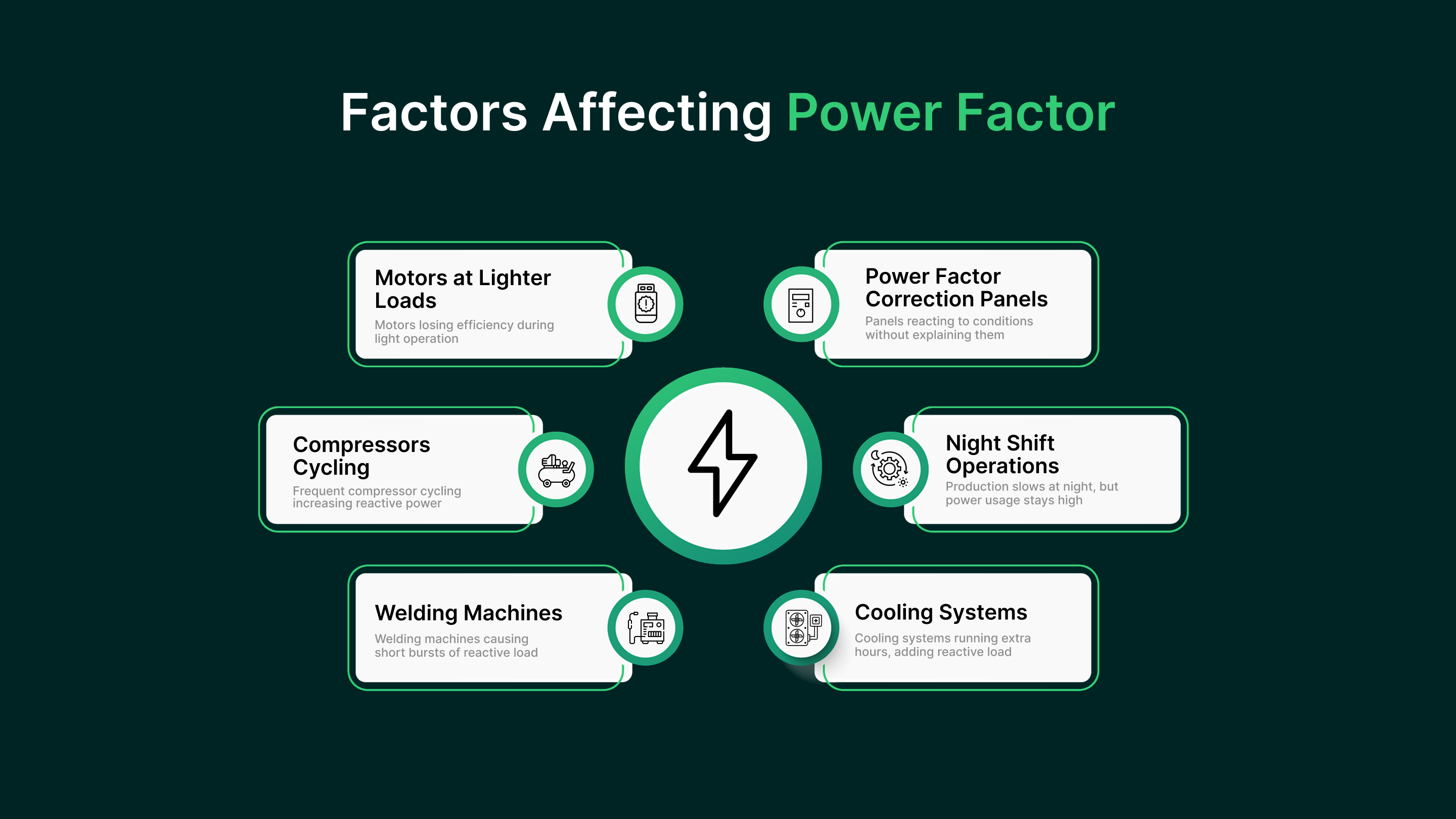
In most factories, the power factor does not fall because something breaks. It slips quietly as daily operations change. Motors run at lighter loads, compressors cycle more often, welding machines start and stop throughout the day, and cooling or ventilation systems operate longer than needed. Each of these actions adds reactive power, even when production output stays the same.
For example, during a night shift with lower production, conveyor motors and exhaust fans may continue running at full speed. Output drops, but reactive load remains almost unchanged. This imbalance slowly pushes the power factor down without anyone noticing. In another case, multiple welding machines may start together after a break, causing short bursts of reactive load that repeat every day.
These changes happen during routine operations, not during failures. Because they spread across hours and days, they do not trigger alarms. Monthly electricity bills only show the final result, such as higher demand charges or power factor penalties, without explaining the cause.
Many factories depend on power factor correction panels and assume the issue is handled. However, these systems react to conditions rather than explain them. Without daily visibility, teams cannot see which shifts increase reactive load or how operating patterns affect power factor.
For instance, a correction panel may work harder during specific hours, but without usage insight, the root cause remains hidden. Power factor control is not a one-time adjustment. It depends on understanding how electricity is used every day, across machines, shifts, and operating conditions.
How Real-Time Electricity Monitoring Helps Control Power Factor
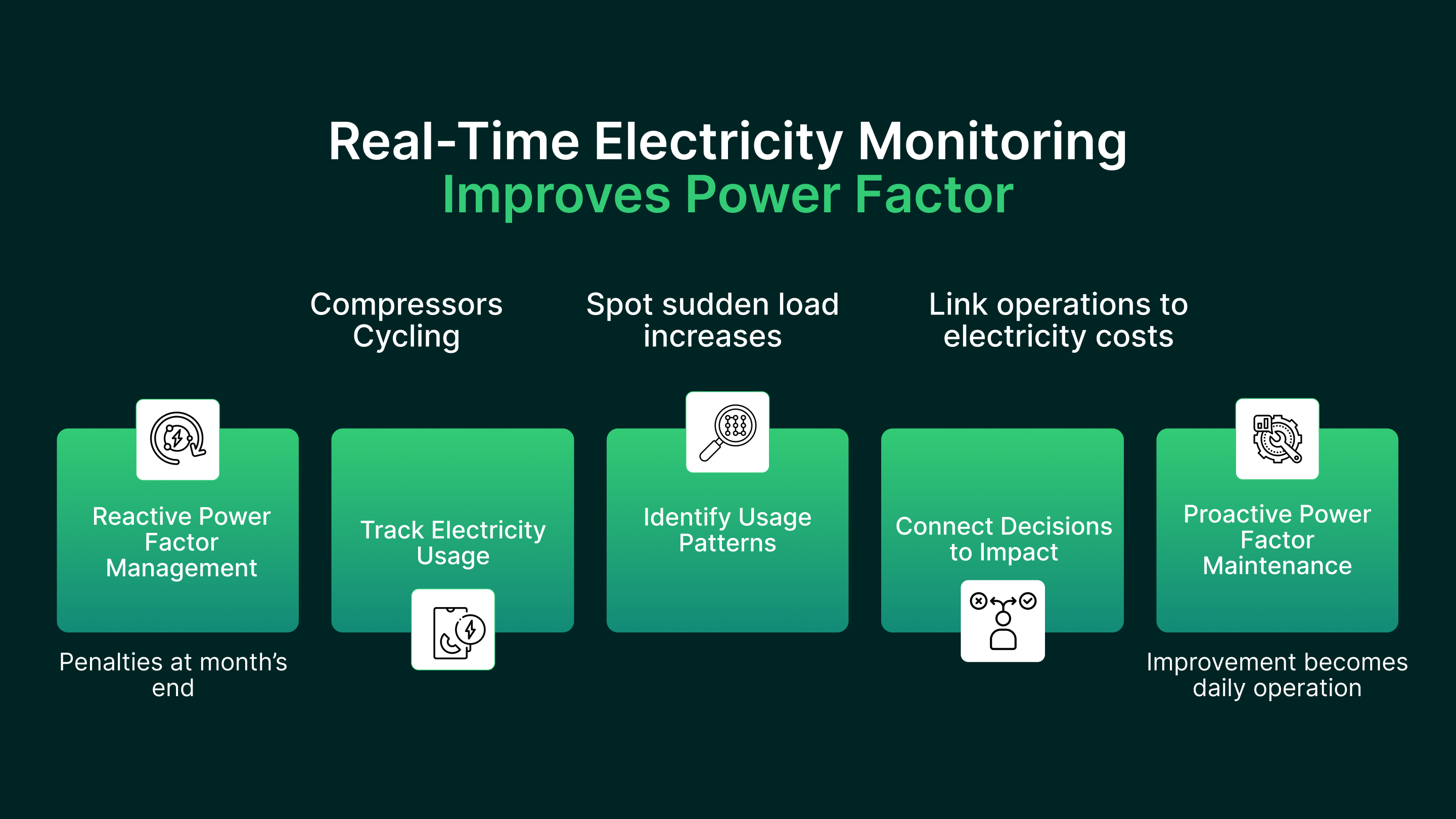
Monthly electricity bills only show the result of a problem, not how or when it started. This is where real-time electricity monitoring changes the way factories manage power factor.
- It allows teams to see electricity usage as it happens instead of waiting for penalties or demand charges at the end of the month.
- Sudden load increases, extended machine running hours, and irregular consumption patterns become visible the same day they occur.
- These patterns often point to rising reactive load, inefficient operations, or equipment running longer than required, even when the power factor value itself is not being tracked directly.
- By continuously tracking total electricity consumption, factories can understand which shifts, processes, or operating habits are putting extra strain on the electrical system.
- This visibility helps teams connect everyday operational decisions with their direct impact on power factor and electricity costs.
Over time, this consistent awareness supports long-term power factor maintenance.
- When usage patterns are reviewed regularly, inefficient habits are less likely to return unnoticed.
- Production and maintenance teams can coordinate better, using shared data instead of assumptions.
- Stress on electrical systems reduces, and power factor improvement becomes part of daily operations, not a reactive fix after penalties appear.
Tools like enciser’s Emerald support this process by providing real-time electricity monitoring through the enciser app, giving factories the clarity needed to manage power factor steadily and avoid repeat issues over the long term.
How Daily, Weekly, and Monthly Patterns Reveal Power Factor Issues in Factories
Power factor improves when factories stop guessing and start noticing how electricity behaves over time.
Daily patterns: It shows what is happening hour by hour. They highlight peak load periods, sudden spikes, or long-running hours that often increase reactive load. This helps teams see which parts of the day strain the system the most.
Weekly patterns: This pattern reveals repeated issues. Certain shifts, production schedules, or maintenance routines may consistently pull down power factor. When the same pattern appears every week, it becomes easier to correct through operational changes.
Monthly patterns: It helps confirm whether improvements are actually working. They show if the reactive load is coming back or staying under control after adjustments.
For example, repeated spikes after shift changes often point to simultaneous machine starts. Spreading startups reduces demand and supports a healthier power factor. Decisions become clearer when patterns are visible, not hidden in bills.
How Emerald Supports Power Factor Management Through Clear Visibility
In many factories, power factor issues are addressed only after penalties appear. Teams know something is off, but without clear visibility into daily electricity usage, it is hard to understand what is actually affecting power factor. Monthly reports arrive too late to explain which operating patterns caused the problem.
This is where simple, continuous electricity monitoring becomes useful. When factories can see how electricity is used across the day, unusual load behavior and extended operating hours become easier to spot. These patterns often point to rising reactive load or inefficient system operation.
Tools like enciser’s Emerald support this process by making electricity usage visible in real time. Emerald connects to the submeter and shows total electricity consumption through the enciser app. It gives factories the clarity needed to understand overall load behavior, plan better power factor correction, and maintain control over power factor more consistently.
Common Power Factor Mistakes Factories Make That Cause Poor Power Factor
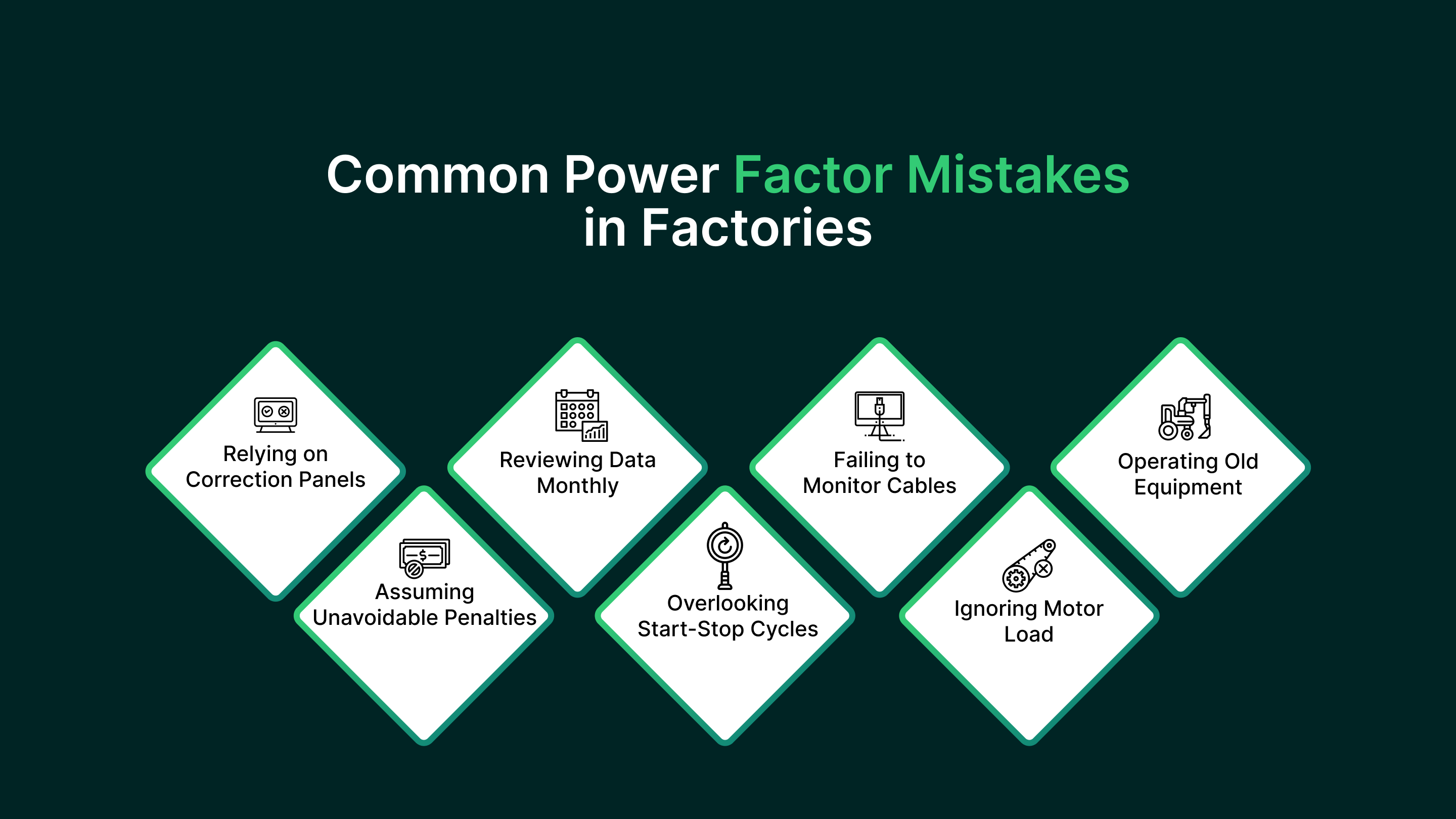
Even experienced factory teams sometimes struggle with managing power factor. Many issues are not caused by a single fault but by everyday operational habits and overlooked inefficiencies. Without proper visibility, reactive power quietly increases, leading to higher electricity demand and penalties.
Common power factor mistakes often include:
- Relying solely on correction panels without checking daily electricity usage.
- Ignoring underloaded or overloaded motors that draw extra reactive power.
- Assuming that penalties are unavoidable without investigating the cause.
- Reviewing energy data only after monthly bills arrive, missing daily spikes.
- Overlooking frequent start-stop cycles of compressors, welding machines, or HVAC systems.
- Failing to monitor long cable runs or inefficient wiring layouts that increase reactive load.
- Continuing to operate old or worn-out equipment that consumes more electricity than needed.
By addressing these common gaps and combining operational awareness with continuous monitoring, factories can maintain a healthier power factor consistently.
Conclusion
Power factor problems in factories rarely come from sudden failures. They develop through everyday operations, shifting loads, and reactive power drawn by common equipment. Without daily visibility, these changes remain hidden until penalties appear.
Improving and maintaining power factor starts with awareness. When factories understand how electricity behaves across hours and shifts, they gain control over costs and system efficiency. Real-time electricity monitoring supports this process by making patterns visible before losses grow.
enciser’s Emerald helps factories build this visibility by providing real-time tracking of total electricity consumption through the Enciser app. With clear insights into daily usage behavior, teams can take timely action and keep the power factor under control as part of regular operations.
How does real-time electricity monitoring help improve power factor?
Can power factor be maintained without monitoring?
Does real-time monitoring measure power factor directly?
What equipment commonly causes low power factor in factories?
How does enciser’s Emerald help with power factor management?
Is power factor correction a one-time fix?

 Previous Blog