
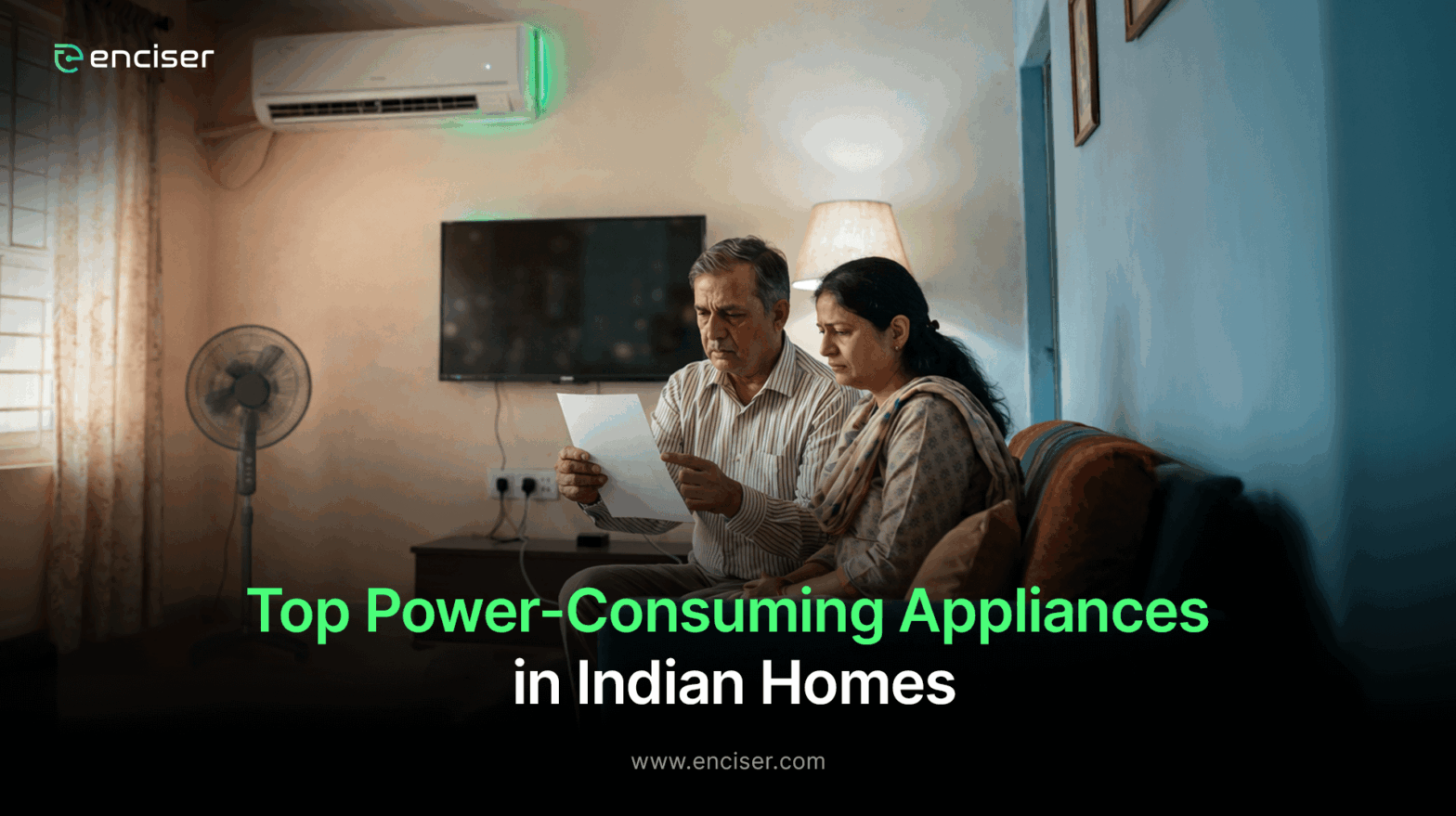
Electricity has become invisible in our daily lives. Lights turn on instantly, rooms cool down within minutes, hot water is available at the turn of a knob, and meals are prepared with the press of a button. Because electricity is always there, most Indian households only think about it when the bill arrives.
And that is usually when confusion begins.
Many families feel they are careful with electricity. The lights are switched off. Fans are used responsibly. Chargers are unplugged. Yet the bill still climbs. Sometimes it jumps suddenly without any obvious change in routine. The natural reaction is frustration, followed by guesswork. Was it the weather? Was it a tariff change? Did someone forget to turn something off?
In reality, electricity bills rarely rise without a cause. The issue is not a lack of discipline, but a lack of visibility. In most Indian homes, a small number of appliances quietly consume a large share of electricity. They do not announce themselves. They blend into daily routines. Over time, they become the real drivers of power usage.
Understanding which appliances consume the most electricity is the first step toward controlling energy costs, reducing waste, and making smarter decisions at home.
Why High Power Consumption Often Goes Unnoticed

Most households assume electricity usage is spread evenly across appliances. This is rarely true. Electricity consumption is usually concentrated in a few devices that either run for long hours or draw heavy power during operation.
High power usage often happens because:
- Appliances operate longer than expected
- Usage patterns change gradually and go unnoticed
- Older appliances lose efficiency over time
- Multiple high-load devices run together during peak hours
Electricity bills show only total units consumed. They do not reveal which appliance caused the increase. Without appliance-level insights, households are left guessing.
This is why many energy-saving efforts feel ineffective. People focus on low-impact habits while high-consumption appliances continue running unchecked.
Common Household Appliances That Increase Power Usage
1. Air Conditioners and Cooling Systems
In Indian homes, air conditioners are the biggest contributors to electricity consumption. During summer months, a single air conditioner can account for forty to sixty percent of a household’s total electricity usage.
This happens for several reasons.
Air conditioners:
- Consume high power during compressor cycles
- Run for long, uninterrupted hours
- Work harder in poorly insulated spaces
- Lose efficiency without regular servicing
Even inverter air conditioners, which are marketed as energy efficient, can consume excessive power if temperature settings are too low or usage is unplanned. Setting the temperature just a few degrees lower can significantly increase power draw.
Many households underestimate how small daily decisions, such as running the AC slightly longer or lowering the temperature at night, add up over an entire billing cycle.
2. Water Heaters and Geysers
Geysers are among the most underestimated power-consuming appliances in Indian homes. They usually run silently in the background, but when they turn on, they draw a heavy electrical load.
Power consumption increases when:
- Geysers are left switched on for extended periods
- Heating cycles repeat multiple times a day
- Internal insulation degrades in older units
In winter, it is common for geysers to be switched on early in the morning and forgotten. Even short heating cycles consume large amounts of electricity, especially in households with multiple bathrooms. Because geysers work in bursts rather than continuously, they often cause sudden bill increases that are difficult to trace without monitoring.
3. Refrigerators
Refrigerators run continuously, twenty-four hours a day, seven days a week. While their power draw at any given moment may seem moderate, their constant operation makes them a major contributor to overall electricity usage.
Electricity consumption increases due to:
- Older refrigerator models with poor efficiency
- Worn door seals that allow cold air leakage
- Frequent door opening
- Incorrect temperature settings
Because refrigerators never truly turn off, even small inefficiencies add up over time. Many households continue using old refrigerators without realizing how much extra power they consume compared to newer, more efficient models.
4. Washing Machines and Laundry Appliances
Washing machines consume electricity mainly during motor operation and water heating cycles. Front-load machines that use hot water can significantly increase electricity usage.
High consumption occurs when:
- Small loads are washed frequently
- Hot water cycles are used unnecessarily
- Electric dryers are used instead of air drying
Laundry habits often evolve as families grow, but power usage patterns are rarely reassessed. What feels convenient in the moment may be expensive over time.
5. Electric Cooking Appliances
Indian kitchens increasingly rely on electric appliances alongside gas. Induction cooktops, microwave ovens, electric kettles, OTGs, and toasters draw high power for short durations.
These appliances contribute to electricity bills because:
- They draw a heavy load instantly
- They are used multiple times a day
- Usage peaks during mornings and evenings
While each use may seem minor, repeated usage throughout the day can significantly impact monthly consumption.
6. Televisions and Home Entertainment Systems
Smart televisions, set-top boxes, sound systems, and gaming consoles form a steady baseline of electricity usage in modern homes.
Hidden consumption often comes from:
- Devices left on standby
- Background updates and connected features
- Long viewing hours
Entertainment systems rarely cause sudden bill spikes, but they steadily increase monthly consumption over time.
7. Work From Home Equipment
With remote and hybrid work becoming common across India, home offices now consume electricity for long hours each day.
Power usage increases when:
- Desktop computers are used instead of laptops
- Multiple monitors remain powered on
- Routers and peripherals run continuously
What was once occasional usage has become a daily routine for many households, quietly raising electricity bills.
Common Myths About Reducing Electricity Bills

Many households believe that saving electricity requires sacrifice. This is not true.
Common myths include:
- Switching off lights saves the most power
- Energy saving requires constant discipline
- High bills are unavoidable in summer
- Monitoring is too complex
In reality, the biggest savings come from understanding a few key appliances and adjusting usage slightly.
Why Your Electricity Bill Alone Cannot Help You Save
Most households can list every appliance they own, but almost nobody can confidently answer one simple question: Which appliance is actually driving the bill this month?
That is because your electricity bill reports only the final total. It tells you how many units were consumed and how much you owe, but it does not explain where the electricity went. In other words, you see the outcome, not the reason.
Here is what the bill does not clearly show:
- Which appliance consumed the most electricity
- When heavy consumption happened during the day
- Whether usage spiked because of one device or many smaller ones
- If something changed compared to last month, like a longer AC runtime or a geyser being left on
This gap creates a common cycle. A bill increases, people make random cuts like reducing fan usage or switching off lights more aggressively, and then the next bill still feels unpredictable. Sometimes families overcorrect and sacrifice comfort. Other times, they do nothing because the cause feels unclear.
Real energy savings usually do not come from extreme restrictions. They come from visibility. Once you can see what is consuming power and when, you can make small, targeted changes that actually reduce waste without turning the home into a constant checklist.
How enciser Emerald Helps You Control Your Electricity Bill
enciser Emerald is built to give Indian households clear visibility into electricity usage. It connects the gap between what your meter records and what your home actually uses, so you can understand consumption patterns and take action with confidence.
What You Get With enciser Emerald
enciser Emerald helps you:
- Track electricity usage in real time so you see what is happening right now
- Review historical trends to understand daily, weekly, and monthly patterns
- Spot peak usage hours when consumption naturally rises
- Catch unusual spikes early before they become bill surprises
This means you do not have to wait for the monthly bill to realize something changed.
Want clarity on what is driving your bill this month? enciser Emerald helps you see it as it happens.
How It Helps Reduce Bills Without Cutting Comfort
enciser Emerald is not about using less electricity by sacrificing your lifestyle. It is about using electricity smarter.
With the right visibility, you can:
- Adjust usage based on real data, not assumptions
- Optimize cooling and heating routines without overusing ACs or geysers
- Identify inefficient or ageing appliances that quietly consume more power
Small changes become effective because they are targeted.
Why This Becomes More Valuable Over Time
The longer you use enciser Emerald, the more useful it becomes. Over weeks and months, you build a clear picture of how your home consumes electricity.
enciser Emerald supports:
- Seasonal planning for summer and winter high-usage months
- Better control during tariff changes and slab shifts
- Smarter appliance decisions based on actual consumption patterns
- Long-term energy efficiency habits that stick because they are measurable
enciser Emerald turns electricity from an invisible cost into a manageable resource.
Why Indian Homes Benefit More From Smart Energy Monitoring
As a bonus section, let us look at why smart energy monitoring is especially important in India.
Electricity usage in Indian homes changes more often than people realize. It shifts with seasons, daily routines, and the way appliances are used together. Because these changes happen gradually, most households notice them only when the bill arrives.
Indian homes face a few specific challenges:
- Strong seasonal changes that increase cooling and heating usage
- Heavy appliance use during morning and evening peak hours
- A mix of old and new appliances with very different efficiency levels
- Slab-based tariffs where small increases raise costs sharply
Smart energy monitoring helps households see these patterns as they form, not after the month ends. When you know what is consuming power and when, you can make small adjustments that prevent bill surprises without cutting comfort.
enciser Emerald is built with Indian usage patterns in mind. It focuses on clarity rather than complexity, helping households understand their electricity behaviour and manage energy more confidently, month after month.
Final Thoughts
Electricity consumption in Indian homes is driven by a small set of high-power appliances. Air conditioners, water heaters, refrigerators, and kitchen appliances account for most of the usage.
Reducing electricity bills does not start with switching off lights. It starts with understanding where electricity is actually being consumed.
When households gain visibility, they gain control. And when control replaces guesswork, energy efficiency becomes achievable without stress.
enciser exists to make that shift possible.
If you want clarity, control, and confidence over your home electricity usage, consider installing enciser Emerald and start making data-driven energy decisions today.
FAQ’s
Which appliances consume the most electricity in Indian homes?
Why does my electricity bill increase even when I switch off lights and fans?
Does running the AC at night consume more than daytime?
Can a single appliance cause a bill spike in one week?
Are old appliances always expensive to run, even if they “still work fine”?
How does enciser Emerald help reduce electricity bills?

 Previous Blog
