Electricity bills can often feel higher than expected when daily usage isn’t being tracked closely, making it difficult to understand what’s contributing to your monthly costs. Many households face this challenge because electricity consumption happens in the background, quietly, continuously, and easily overlooked until the bill arrives.
That’s why setting an electricity budget for your home becomes such an essential step. It brings clarity, control, and predictability to something that usually feels overwhelming.
In this guide, you’ll learn how to build a practical electricity budget, understand your usage patterns, and develop simple habits that make staying within your limit easier. You’ll also see how tools like enciser‘s Emerald help you monitor usage more accurately and make informed energy decisions.
Understand Your Electricity Consumption Before Setting a Budget
Understanding your current electricity usage is the first step toward creating a realistic and effective electricity budget for your home. Before setting any limit, you need a clear view of how much energy your household actually consumes. Start by checking your previous electricity bills from the last few months. This helps you identify patterns, such as higher usage during summer cooling, winter heating, or days when more appliances are running.
Your electricity consumption can shift based on season, lifestyle, or the number of people at home, so establishing a baseline is essential. This baseline becomes the foundation of your monthly electricity budget and helps you avoid underestimating or overspending.
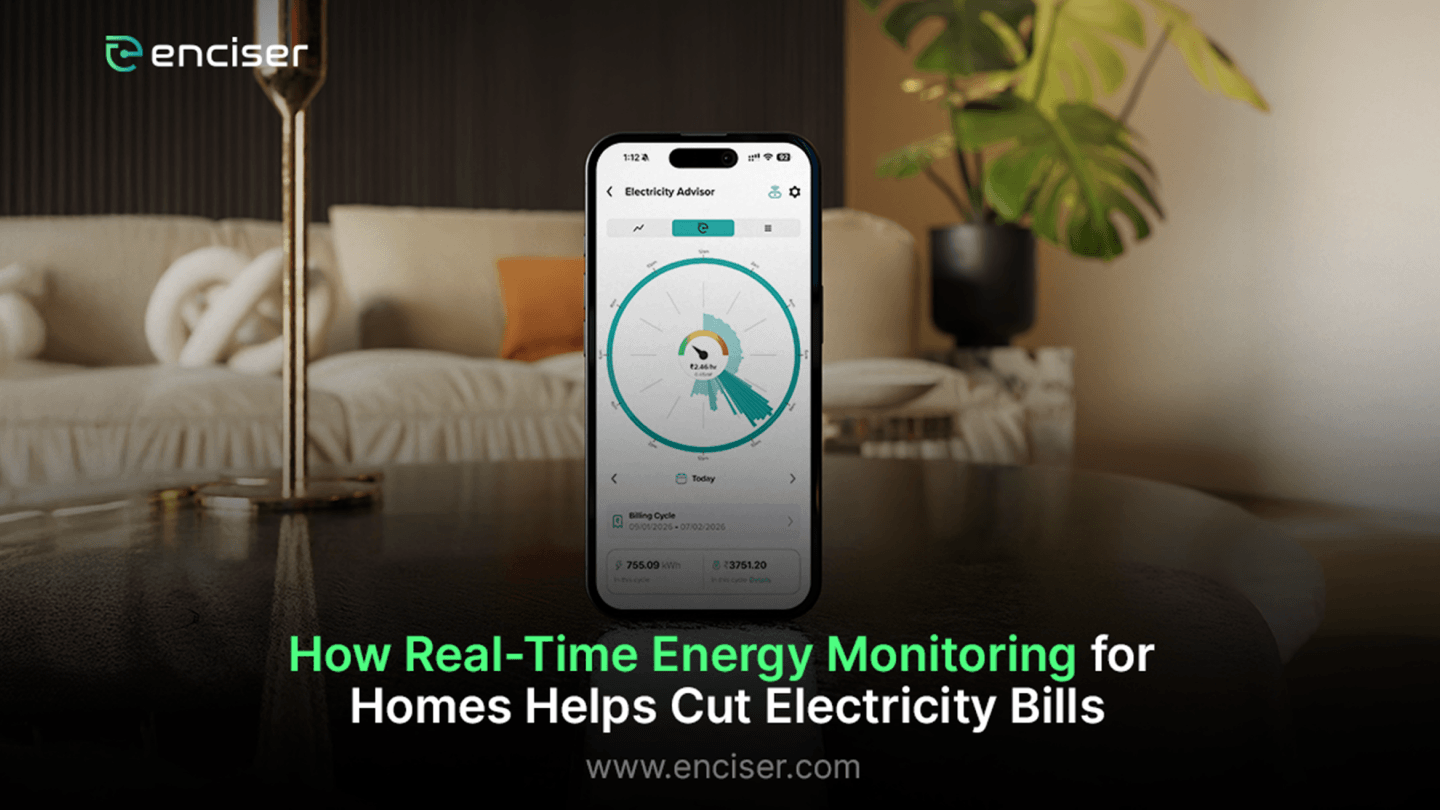
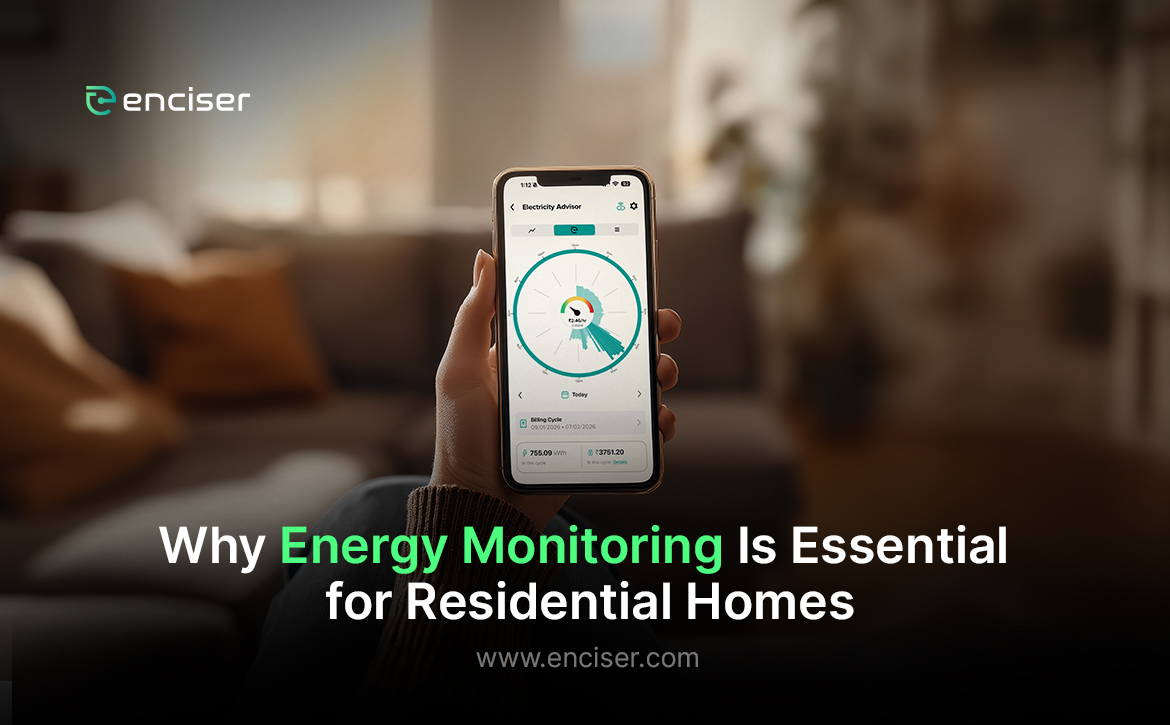
For more accurate insights, track your daily and weekly usage using sub-meters or real-time monitoring tools. enciser’s Emerald helps you set a clear monthly electricity budget and automatically sends alerts and notifications when you’re close to reaching it. This keeps you aware, in control, and confident about managing your monthly electricity expenses.
How to Set a Monthly Electricity Budget That Works
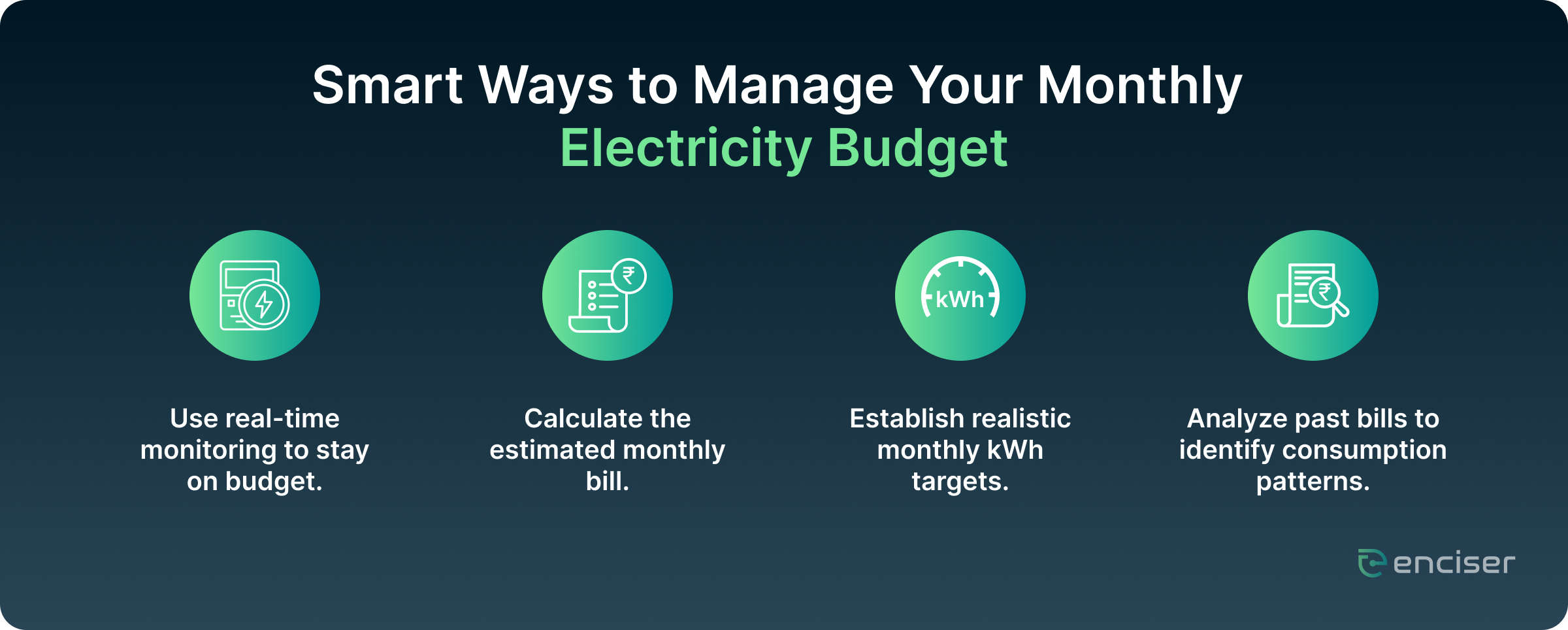
Setting a monthly electricity budget becomes much easier when you follow a clear, step-by-step process. With the right planning, tracking, and tools, you can stay in control, avoid surprises, and manage your electricity bill more effectively.
Here’s how to do it:
Step 1: Understand Your Current Electricity Usage
Before you create a budget, you need a clear picture of how much electricity your home already consumes. Start by checking your electricity bills from the last three to six months. This helps you identify typical usage levels and spot patterns.
Electricity consumption usually changes with the seasons. Summer may increase AC usage, while winter can raise heating or geyser consumption. Household size also matters; a family of four will naturally use more units than someone living alone. Homes with multiple high-energy appliances (like ACs, water heaters, or dryers) also have higher consumption.
Understanding these factors gives you a realistic baseline to begin setting your electricity budget.
Step 2: Set Realistic Monthly Usage Limits (kWh)
Once you understand your usual electricity usage, choose how many units (kWh) you want to stay within each month. This becomes the base of your electricity budget.
Start with your average monthly usage and adjust based on upcoming needs. For example:
- If you’re entering summer, increase units slightly for AC usage.
- If you plan to travel or spend less time at home, reduce the limit.
A realistic monthly target gives you direction. It becomes a practical guide that helps you monitor daily usage and avoid overspending.
Step 3: Convert Units Into an Estimated Money Budget
After setting your unit limit, convert it into a cost to understand how much you’ll spend each month. Check your electricity tariff (rate per kWh) and multiply:
Monthly usage target × rate per kWh = estimated monthly bill
For example, 400 kWh × ₹8 per kWh = ₹3,200.
Adding a small buffer helps prevent unexpected excess when your usage fluctuates.
This calculation allows you to predict and control your monthly electricity expenses before the bill arrives.
Step 4: Keep Your Monthly Electricity Budget on Track with Emerald
Sticking to your monthly electricity budget becomes much easier when you know exactly how many units you are using each day. Daily monitoring helps you stay aware, make quick adjustments, and avoid crossing your planned limit without realizing it.
This is where enciser’s Emerald becomes a powerful part of your budgeting routine. Once you connect the Emerald device to your submeter and link it with the enciser app, you instantly start receiving real-time electricity usage insights. You can check your daily consumption, compare weekly trends, and understand how your habits affect your monthly electricity expenses.
What makes Emerald even more useful is the ability to set your monthly electricity budget directly inside the app. You simply add the amount you want to stay within, and the app takes care of the rest. As you continue using electricity throughout the month, Emerald keeps tracking your usage and updates you in real time.
The enciser app also sends alerts and notifications when your consumption is higher than expected or when you are close to exhausting your budget. These reminders help you take action immediately so you stay in control. For example, if you’re using more units on a hot day due to prolonged AC use, the alert helps you adjust other activities to stay within your planned limit.
With daily visibility and timely notifications, Emerald ensures that your monthly electricity budget stays on track. It removes the guesswork, keeps you informed, and gives you the confidence that you’re making smarter electricity choices every single day.
Smart Daily Habits That Support Your Electricity Budget

Even with daily tracking and alerts, your everyday habits play a major role in staying within your monthly electricity budget. Small, steady adjustments can create meaningful reductions in your overall electricity usage.
- Shift high-energy activities: Run washing machines or dishwashers during off-peak hours if your utility offers lower rates.
- Reduce standby consumption: Unplug chargers, devices, and appliances that draw power even when they’re not in use.
- Use lighting wisely: Turn off lights when leaving a room and choose energy-efficient options whenever possible.
- Optimize AC and heating: Adjust temperature settings slightly to save energy without affecting comfort.
When combined with daily electricity monitoring, these habits become easier to maintain. enciser’s Emerald helps you see the real-time impact of your choices, making energy-saving decisions feel natural and effortless.
Improve Your Energy Savings with a Simple Monthly Review
Start by reviewing your monthly consumption to understand whether your electricity budget is working.
- Check your electricity bill amount online and compare it with the limit you set for the month.
- Use electricity bill check online tools to track the exact units used.
- If you used more than planned, identify the reason and adjust your next month’s electricity budget.
- If your usage stayed lower, safely reduce the budget to save more.
- Regularly view the electricity bill online to monitor weekly and monthly patterns.
- Checking the electricity bill status online helps you keep your spending realistic and manageable.
End by refining your budget each month to stay in full control of your electricity costs.
Conclusion
Setting an electricity budget for your home is a simple but powerful way to take control of your monthly bills. By understanding your usage, setting realistic unit and cost targets, and tracking your consumption daily, you can avoid surprises and make smarter energy decisions.
Tools like Emerald make daily monitoring effortless. With real-time usage insights, alerts, and trend tracking, Emerald helps you stay within your electricity budget, adopt energy-saving habits, and reduce your monthly expenses over time.
Daily awareness and consistent tracking are the keys to long-term savings. Once you implement a system like Emerald, staying within your electricity budget becomes easier than ever, giving you both control and peace of mind.
FAQs
How do I start setting an electricity budget for my home?
Can daily monitoring really lower my electricity bill?
How do I convert electricity units into a monthly cost?
Do I need technical skills to monitor electricity daily?
What are practical ways to stay within my electricity budget?
How often should I review and adjust my electricity budget?

 Previous Blog