Introduction
High electricity bills can be caused by several factors besides the skyrocketing prices of energy which have doubled in the last decade or so.
Apart from the rising cost, poor energy habits and inefficient appliances can contribute big time to increasing your monthly utility bills.
More energy bills every other month can lead to a lot of financial hardship if you solely rely on electricity to run your household.
To overcome that and reduce your monthly expenditure all the while, you can always turn to things such as a solar energy panel, energy-efficient appliances, and electricity usage monitors.
Even if you can’t afford any of that, there are plenty of other practical solutions that you can use to minimize your monthly energy bills, starting with, understanding your electricity bill. You can calculate your electricity bill with the electricity bill calculator Punjab.
Understand Your Electricity Bill
Your electricity bill is not just a price tag that you can dispose of after checking/ paying the bill.
Better yet, it is a comprehensive record of your energy usage and the costs associated with it including any taxes and rebates (if applicable) for a specific duration aka the billing period.
As such, it can give you an accurate analysis of your energy consumption which you can use to keep your future bills in check.
Measured in kilowatt hours (kWh), the energy bill is calculated on a per-unit basis based on the cost of 1kWh or 1 unit of electricity which is about Rs. 7.00 in India.
So if you were to use 260 units/ kWh of electricity in a month, which is the average amount of electricity an Indian household consumes, you will end up paying 260 kWh x Rs. 7.00 = Rs. 1820/- for energy usage alone.
Moreover, energy charges are typically slab-based, which means once you cross a particular limit, you will end up paying more per unit which varies from state to state and usage to usage.
Apart from the differing energy tariffs, you will also have to pay a certain amount for the cost of infrastructure and maintenance which are covered under fixed charges.
Similarly, there is the meter rent that you are liable to pay every month, which again varies based on the type of meter, supply, and sanctioned load.
With that clarified, let us focus on some of the common factors that can significantly boost your energy usage.
Key Factors Leading to High Electricity Bills
1. Vampire Appliances
Vampire appliances or energy vampires are devices that continue to drain energy even when in standby mode or not in use. E.g., television, gaming consoles, chargers, and so on.
To be specific, a modern LED or LCD can drain about 1-3 watts of energy on stand-by, increasing your monthly usage by about 1-2 kWh.
Similarly, a cable or DTH box can consume about 10–30 watts of energy even when the television is off and boost the monthly consumption by 7–22 kWh.
All-in-all, an average household can waste about 15–50 kWh of energy per month which can substantially increase the cost of electricity at the end from Rs 100 to Rs 500 or even more every month.
2. Old and Inefficient Appliances
While more and more appliances are becoming energy-efficient, thanks to innovations in technology, many households still use old and traditional appliances that use way more power.
These include things such as old and inefficient refrigerators, air conditioners, washing machines, water heaters, and so on.
To give you a better perspective, while an outdated refrigerator uses about 1,200–2,000 kWh of energy per year, an energy-efficient or star-rated refrigerator only consumes about 350–500 kWh of energy every year.
Similarly, while an old window AC with a low energy efficiency ratio (EER) can consume up to 2,500 kWh of electricity to run in a year, a modern or smart AC with high star ratings will only use about 1,200–1,500 kWh of electricity per year.
As you must get the idea, by upgrading your old and inefficient appliances with smart energy-efficient ones, you can save as much as Rs 15,000 to Rs 50,000 on energy bills annually.
3. Increased Rates and Peak Hour Usage
Needless to say, the more energy you use during the peak hours, the more the cost of electricity that you will have to pay for that particular duration.
FYI, the cost of electricity in India during peak hours is expected to rise by 10-20% of the normal tariff, starting the next financial year i.e. April 1, 2025.
This makes it even more crucial to reduce your energy usage in time, especially, during the peak hours and otherwise as well.
To help you combat the increasing rates of electricity and reduce your energy demands, here are certain tips that you can apply.
Advanced Tips to Reduce Electricity Costs
1. Invest in Smart Technology
While using energy responsibly and mindfully is the first step to reducing your monthly bills, there are many other ways you can do it including smart devices.
By giving you remote access and the ability to automate, smart appliances such as programmable thermostats can automatically adjust the cooling and heating based on your usage and conditions.
Similarly, installing smart plugs on power outlets that provide energy to heavy consumers such as HVAC systems can significantly reduce their energy usage and wastage.
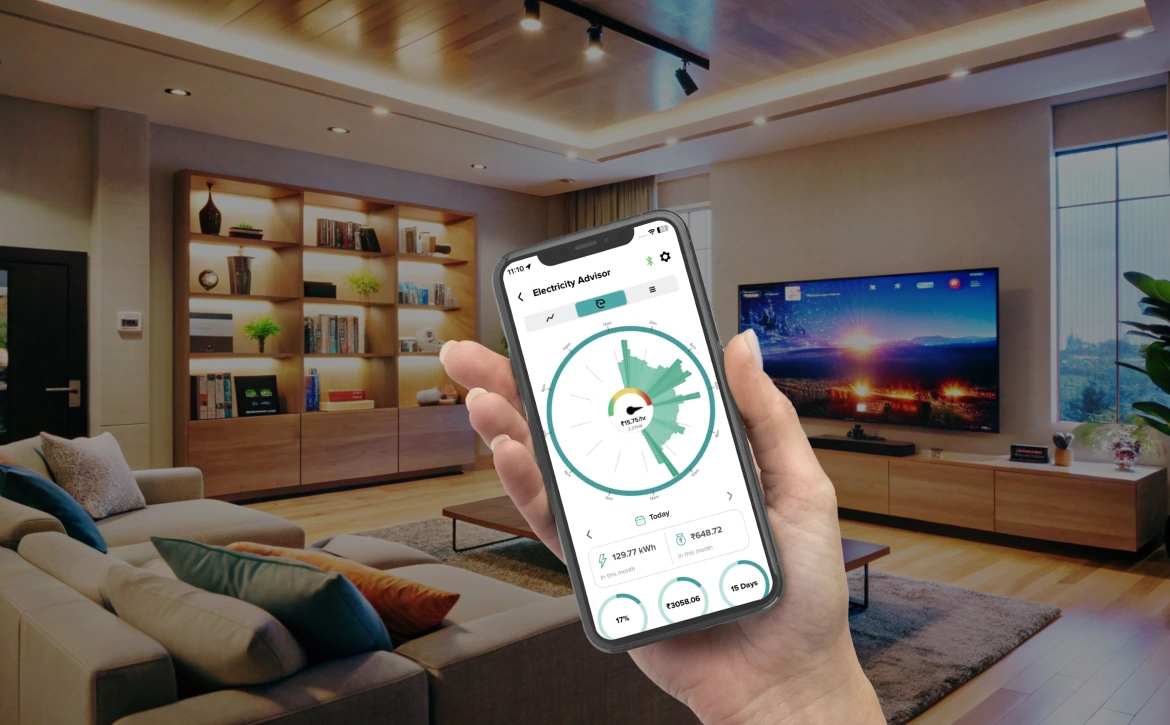
Perhaps, one of the most effective tools that you can use to control your energy usage is by monitoring it from time to time using a smart electricity usage monitor like Enciser’s Emerald.
Packed with features such as automation, real-time data on energy usage, advanced bill calculation, and smart energy budgeting, Emerald can give you a convenient way to gain control over all the energy-consuming devices and your house as a whole.
In the end, it can help you save a staggering 15-20% of electricity every month.
2. Switch to Efficient Lighting
As the one thing that keeps on running day and night, efficient lighting might very well be the most essential aspect of energy efficiency.
As negligible as it may sound, inefficient lighting can account for about 10-15% of your monthly electricity bills.
On the other hand, an energy-efficient bulb like an LED can save up to 90% of electricity and run for 25 times longer than a conventional light bulb.
3. Optimize Heating & Cooling
Being the largest consumer of electricity, heating, ventilation, and cooling (HVAC) systems can account for about 40-50% or half of the total energy consumed by an average household.
As such, reducing your heating and cooling needs can contribute significantly to your quest to lower your monthly utility bills.
Apart from upgrading to an energy-efficient HVAC system, you might want to pay attention to any leaks near the doors and windows to ensure optimal insulation.
At the same time, using a smart thermostat can help you remarkably regulate the temperature and reduce the total load on your HVAC system.
4. Use Appliances Smartly
No matter how smart or efficient your appliance is, at the end of the day, it is all about when and how you use it.
That is, whether you use them in peak hours or not. Or, whether you maintain them properly from time to time.
Cut to the chase, to make the most of it, here’s what you need to do:
- Shift to off-peak hours when most utility companies offer electricity at cheaper rates than peak hours.
- Use natural energy like the sun or air to dry your laundry.
- Regularly maintain your appliances, especially, before and after the season.
- Reduce phantom loads by unplugging the devices that are not in use.
- Ensure proper insulation.
- And most importantly, keep a close eye on your energy usage.
5. Conduct an Energy Audit
An energy survey or audit can bring out all the areas and devices that consume more energy than anticipated.
With comprehensive details upfront, you can make the necessary changes in the way you use energy and replace any appliances (if needed).
While there are many professional energy audit services, here’s how you can DIY:
– Step 1: Understand your energy usage by going through your bills.
– Step 2: Check for energy loss and leaks (insulation).
– Step 3: Evaluate your heating and cooling systems.
– Step 4: Assess your appliances and electronics.
– Step 5: Inspect lighting.
– Step 6: Find out your options for renewable energy.
– Step 7: Analyze your phantom loads.
– Step 8: Devise an action plan.
– Step 9: Implement changes.
– Step 10: Measure your consumption and monitor your progress.
Recent Government Rebates and Incentives
Like most governments, the Government of India (GOI) is all-in when it comes to rewarding conscious consumers through various electricity rebates and subsidies.
Some of the most significant initiatives include:
- PM Surya Ghar: Muft Bijli Yojana, which offers a subsidy to homes that have installed a rooftop solar.
- Residential Energy Credits is yet another program by GOI that provides credits which you can avail of when filing your tax return.
Similarly, different states in the Indian territory have their own rebates and incentives such as the State Financial Assistance in Haryana.
Or, the free electricity scheme of 300 units per month by the Punjab Government.
Likewise, there are many other types of programs and rebates that you can find.
Behavioral Adjustments for Long-Term Savings
Aside from government initiatives, the need to make adjustments in your energy usage behaviors can go a long way in reducing your monthly bills for years and decades to come.
Some of the rather crucial practices that you should adopt for energy efficiency are:
– Turning off appliances and lights when not in use.
– Using natural light and ventilation when possible.
– Carrying out regular maintenance of the appliances.
– Installing smart power strips and thermostats.
– Running energy-intensive tasks during non-peak hours.
– Monitoring your energy usage using a smart energy monitor like Enciser.
Environmental and Cost Benefits of Reducing Consumption
By reducing your energy consumption and demand, you can not only lower your electricity bills but also the environmental impact it causes.
Apart from reducing the carbon footprint of your home, lower energy usage also leads to the conservation of all the resources that are needed to produce and supply electricity in the first place. For instance, the burning of fossil fuels such as coal and wastage of large volumes of water for cooling the power plants.
Conclusion
As you can see, reducing your household’s energy consumption can offer ample long-term benefits both financially and environmentally.
From reducing your energy bills to minimizing carbon emissions to bringing all kinds of tax benefits, a responsible use of energy is something you cannot miss, especially, given the soaring prices of energy as we speak.
To further enhance the energy efficiency of your home, you can always switch to energy-efficient appliances including smart electricity usage monitor such as Emerald, and gain better control over your usage.

 Previous Blog