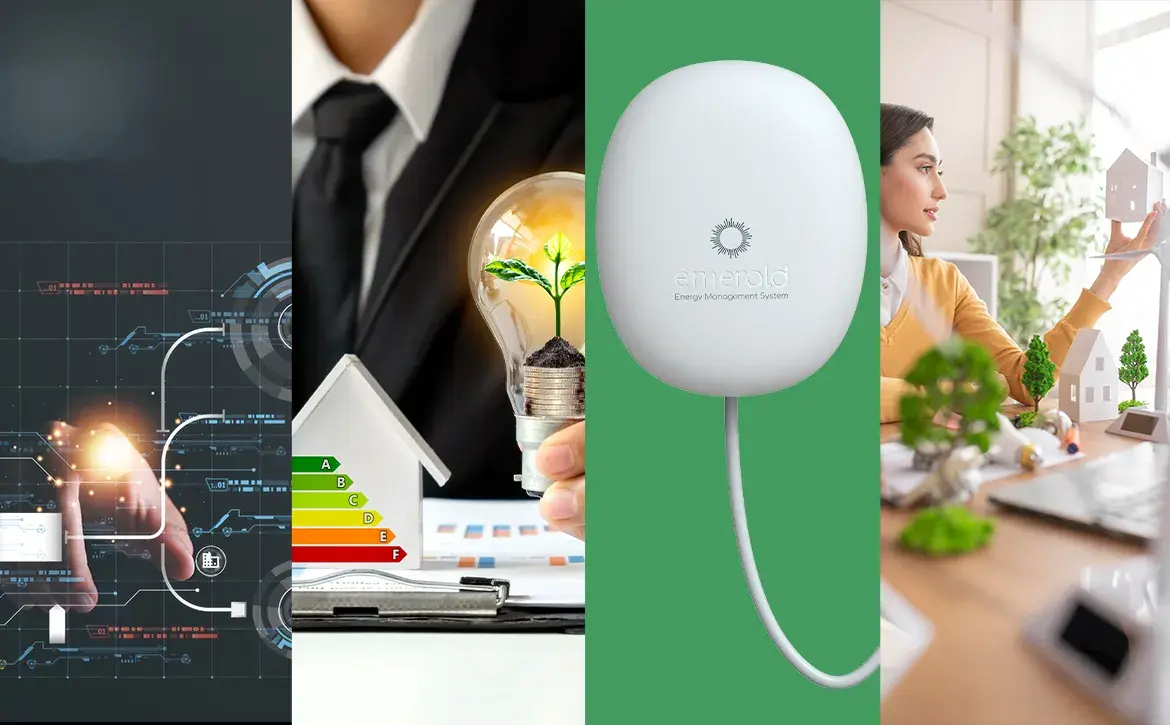
Introduction
An Energy Management System (EMS) is a special software or framework that is designed to monitor, manage, and reduce the overall energy consumption of a device, building, or machine.
Likewise, there are many types of EMS solutions in the market each dedicated to different types of things.
For instance, for managing your home’s energy supply, there is a home energy management system (HEMS) that can be used in both conventional and modern households or the residential sector as a whole.
Similarly, an industrial energy management system or IEMS can be employed in industrial settings such as manufacturing facilities to track and reduce their power consumption.
Regardless of the space or structure, EMS/EnMS solutions are usually quite effective in reducing energy consumption and the overall cost of running the place.
This makes it rather important for areas or countries where the cost of electricity is relatively high. E.g. India!
To overcome the rising cost of energy and meet the demands, the GOI (Government of India) is all in when it comes to using energy efficiently and consciously through various means like smart energy meters, energy-efficient appliances, direct awareness, or energy management systems.
And so should you!
Speaking of which, some of the most common types of EMS that you can find include:
1. Building Energy Management Systems (BEMS)

According to the Department for Energy Security & Net Zero, BEMS is defined as a system of various hardware and software components that helps track/manage the power consumption of a building.
This includes measuring, recording, accessing, and controlling the real-time usage of available energy, and that too, remotely (in most advanced systems).
Additional alarming capabilities further make them a useful tool to reduce unnecessary energy usage/loss and prevent any failures with early detection.
In broader terms, BEMS encompasses all the aspects of running a building or property including heating, cooling, water heating, air conditioning, ventilation, security, lighting, blinds, and other smart mechanisms such as lift/elevators and automatic lawn watering.
Applicable to residential, commercial, as well as institutional properties,BEMS offers various applications such as :
- Improvement of building and plant operations.
- Provision of energy management information.
- Remote accessing and management of services and functions of one or several buildings.
- Automation of services, operations, and appliances.
- Insights into building status and environmental factors.
Along with these major applications, you will get plenty of practical and economical benefits by implementing an EMS into your building. For instance:
- Improved energy efficiency.
- Lack of environmental impact.
- Better use of staff.
- Immediate fire, security, and other emergency responses.
- Enhanced functioning/management of the building or plant.
2. Home Energy Management Systems (HEMS)
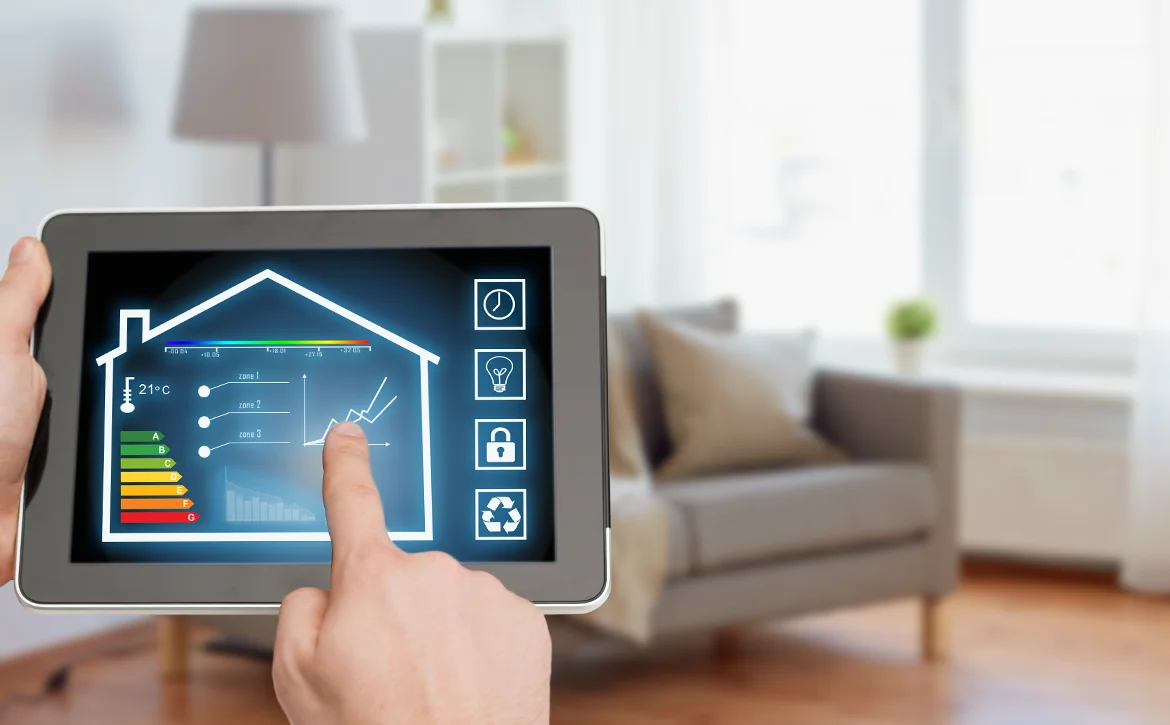
A home energy management system, on the other hand, is a small-scale but advanced variation of an EMS designed to monitor and manage a household’s power consumption.
Compatible with smart energy meters and rooftop solars, HEMS can be used to manage the electricity consumption of smart home automation systems, energy-efficient appliances, heat pumps, as well as electric vehicles (EVs).
Some of the major applications and features of a home energy management system include:
- Device monitoring and control.
- Seamless communication between various devices/appliances.
- Demand Response (DR) or the ability to receive signals from an object or utility.
- Energy usage details in real-time.
- Data management.
- Security and Privacy.
In the era of smart grids and smart homes, an advanced HEMS can bring ample benefits to the table starting with improved energy efficiency, awareness, and eventually a lower cost of utility.
At the same time, implementing a HEMS into your household can help you automate or create schedules for many of the smart home appliances and systems that you may have.
All you need is the Internet and a powerful home electricity usage monitor device like our Enciser’s Emerald!
Embedded with advanced technology and features, Emerald is a smart energy monitor that can be directly attached to your smart energy meter to give you real-time access and management of your home’s energy consumption right at your fingertips, thanks to our user-friendly app Enciser. You can calculate your electricity bill with the electricity bill calculator Punjab.
3. Industrial Energy Management Systems (IEMS)

IEMS are high-end energy management solutions that come with advanced features like customization and device integration to meet your industry requirements.
Designed for industrial and commercial establishments, an IEMS can help you monitor, analyze, report, control, and automate the energy usage of your business operations as a whole including the space as well as the equipment or machines.
To do that efficiently, an IEMS may employ several techniques and components such as smart meter integration, load management, controlled transmission, and centralized interface or control panel for easy management of energy.
Some of its unique applications include:
Supervisory Control and Data Acquisition.
- Programmable Logic Control (PLC).
- Distribution control.
- Energy Platform & Analytics.
- Meter Data Management.
- Energy Management Information.
- Peak Load Control.
- Demand Response Management.
Apart from energy saving, an IEMS can offer several other benefits such as:
- Improved operations.
- Lack of environmental impact.
- Regulatory compliance.
- Competitive edge.
- Data-driven energy-management.
- Employee awareness.
- Integration with other industrial systems and machines.
- Predictive maintenance.
- Longer lifespan of the equipment with early detection of errors and faults.
- Cost cutting.
4. Community Energy Management Systems (CEMS)

The concept of community-oriented energy management systems is based on properly utilizing different energy management systems including BEMS, HEMS, and IEMS to manage and reduce the electricity consumption of a community or the city as a whole.
As an essential aspect of smart city and Sustainable Development Goals (SDGs), a CEMS involves making efficient use of renewable energy sources, storage solutions, and smart grid technologies to create a more sustainable and energy-efficient ecosystem.
Some of the key applications of CEMS for communities and cities are:
- Integration of renewable energy.
- Demand response and peak load management.
- Energy storage and provision of micro-grids.
- Smart metering and energy monitoring.
- EV integration.
- Energy security and sustainability.
- Data-driven urban planning.
- Regulatory Compliance and Incentive Programs.
By implementing a CEMS into your neighborhood or community, you can gain a lot of advantages.
- Improved energy efficiency.
- Increased adoption of renewable energy.
- Better energy resilience.
- Economic growth.
- Environmental sustainability.
- Increased community awareness and engagement.
- Energy equity.
- Long-term cost reductions.
Comparative Analysis of Different EMS
While all the EMS solutions are based on the same principle i.e. an efficient use of energy, there is some or other difference between each of them.
For instance, a BEMS is used to optimize the energy usage of commercial buildings concerning lighting, HVAC, and other operational facilities.
A HEMS, on the other hand, is best suitable for home settings as it can integrate smart home appliances, home automation, and renewable energy sources such as rooftop solar.
Similarly, an IEMS or Industrial EMS is meant to be used in manufacturing facilities and production plants to reduce their power consumption and energy loss while enhancing overall productivity.
Community Energy Management Systems (CEMS) is a combination of all the different types of EMS solutions that can be used to reduce energy consumption on a large scale.
As such, they are meant to coordinate the energy generation, consumption, and storage of entire neighborhoods and cities by integrating renewables, microgrids, EV infrastructure, and other energy-consuming areas.
Conclusion
In essence, EMS solutions are devised to manage and reduce the energy consumption of different types of areas, buildings, and machines.
Considering the wide range of smart solutions all around, each of these systems is designed to work with specific third-party devices such as smart home appliances, home automation, sensors, energy meters, industrial equipment, and renewable sources of energy such as wind and solar to further enhance their energy-saving capabilities.
Enciser’s Emerald is one such energy management device that is designehttps://enciser.com/emerald/d to monitor and manage the energy usage of households of all shapes and sizes.
Given the skyrocketing prices of energy in India, it is high time to complement your home with a smart energy monitor like Emerald and cut the monthly costs by using energy efficiently.

 Previous Blog